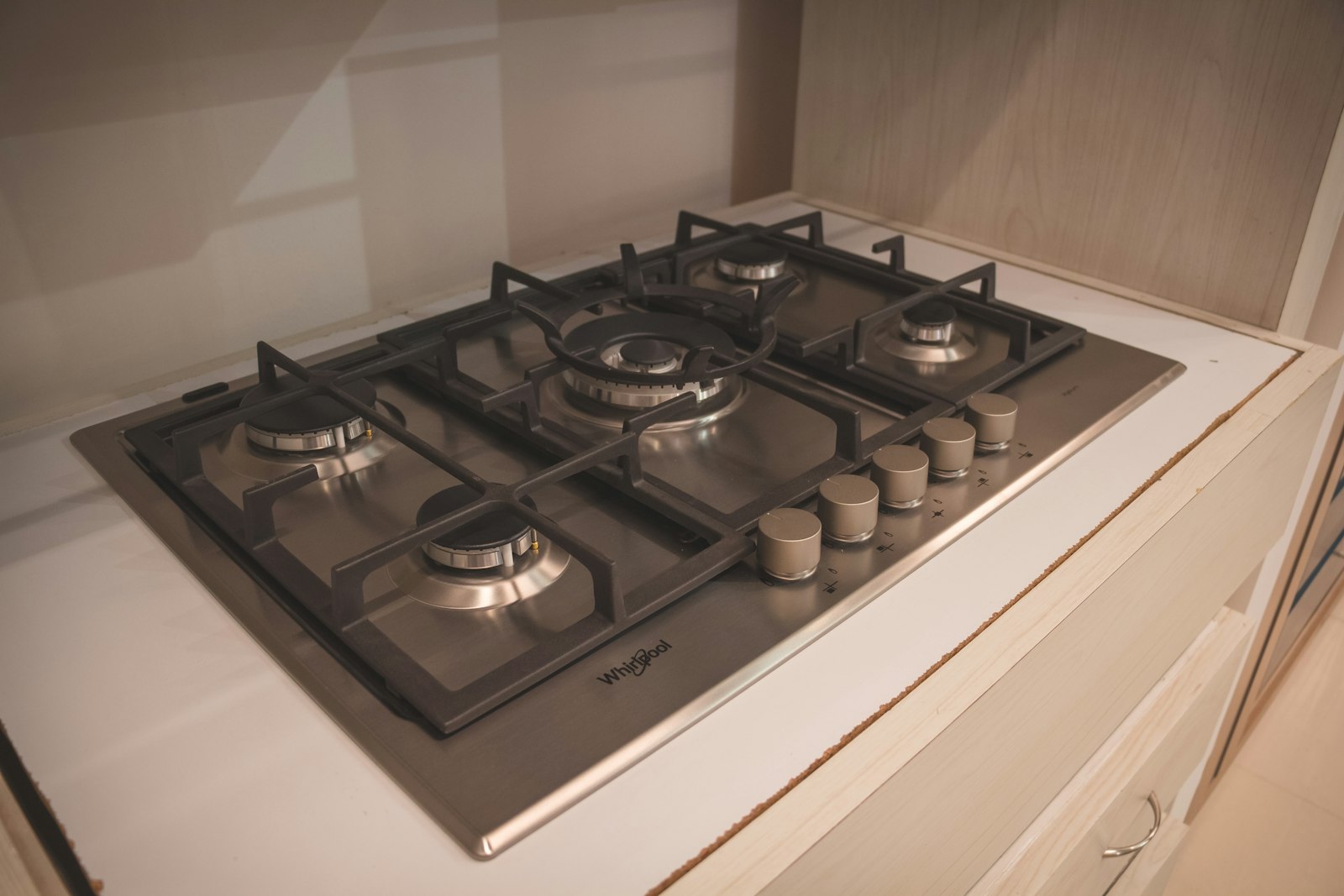
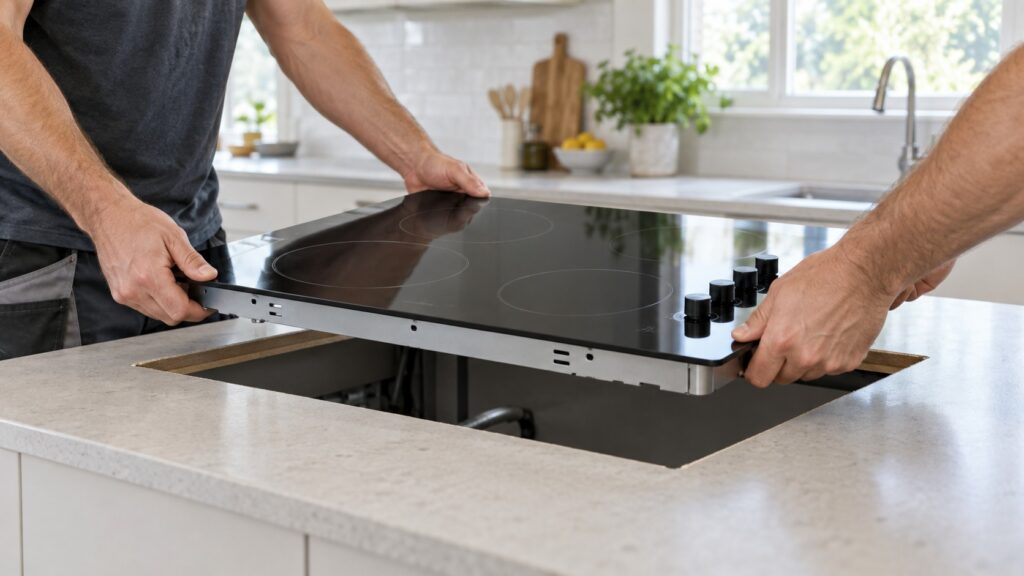
A cooktop drops into a hole in a countertop, which makes frigidaire cooktop installation sound simpler than it is. The hole has to be the right size and in the right place, the appliance has to have air and clearance it cannot get from the finished look of the kitchen, and the connection underneath has to be made properly. Most installation problems we are called to were decided before the cooktop was ever unboxed.
The cutout is the whole job
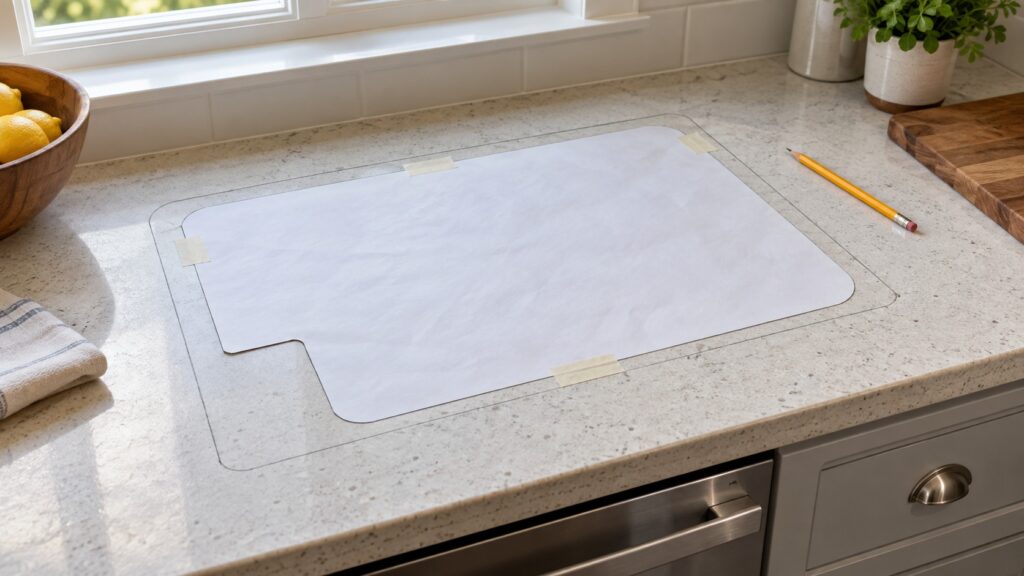
Every model ships with a template, and the template is not generic. Two cooktops of the same nominal width can want cutouts that differ by an inch, and corner radii differ too. Cutting to the old appliance’s opening because “it was a thirty-inch as well” is the single most common way this goes wrong, and a countertop is not a forgiving thing to correct.
Measure the opening you have before you buy, not after. If you are replacing an existing cooktop, note the actual cutout dimensions rather than the appliance dimensions — the appliance overlaps the opening by a lip, and it is the opening that must match.
On stone counters, enlarging a cutout is specialist work and carries real risk of cracking. On laminate, the cut edge should be sealed so moisture does not swell the substrate. Neither is a job to improvise on a Saturday.
What has to be true underneath
A cooktop needs depth below the counter, and the requirement varies by type. Induction units have cooling fans and need unobstructed air; gas units need clearance for the burner box and the gas connection. A drawer immediately beneath is often not permitted, and where it is, the drawer’s contents still have to clear the appliance.
The most common surprise is a wall oven installed below. Some combinations are approved and some are explicitly not, because the oven’s heat and venting interact with the cooktop above. Check the combination against both appliances’ requirements rather than assuming that because it fits, it is allowed.
Electric connection
Electric cooktops are usually hard-wired to a junction box rather than plugged in, on a dedicated circuit sized to the appliance’s rating. That rating varies considerably — a four-element radiant cooktop and a five-element induction unit do not draw the same current, and an existing circuit that served the old appliance may not be adequate for the new one.
Induction in particular deserves a check, because the peak demand is high. Confirm the required breaker size on the appliance’s rating plate against what is actually installed. If they differ, that is an electrician’s job before delivery day, not a discovery on it.
Gas connection
Gas cooktops need an accessible shutoff valve, an approved flexible connector or rigid pipe, and thread compound rated for gas. Do not reuse an old connector. Once gas is restored, test every joint with soapy water and watch for bubbles rather than relying on smell.
Two further points get missed. The orifices are sized for a specific fuel, so a unit run on propane rather than natural gas needs the correct conversion kit fitted — running it unconverted is dangerous and it will show as yellow, sooty flames. And in many jurisdictions the connection must be made by a qualified person; check what applies where you live before you start.
Induction adds two requirements of its own
An induction cooktop generates heat in the pan rather than in the surface, and that changes the installation in two ways people are not warned about. First, the electronics under the glass need airflow, so the ventilation openings in the appliance must not be obstructed by the counter substrate, by insulation, or by a snug drawer beneath.
Second, induction and a metal countertop or a metal support frame directly under the glass do not mix. The instructions specify what may sit beneath and how close, and this is one of the few places where ignoring a clearance produces a problem immediately rather than in five years.
Cookware is worth mentioning at the same time, because it is the other half of the same physics. If a magnet does not stick firmly to the base of a pan, that pan will not work on induction, and no setting changes that.
Ventilation above
The hood or microwave above has a specified minimum height above the cooking surface, and gas units typically demand more than electric. Mounting a hood too low is a fire risk over gas burners and makes the surface unusable for tall pots; mounting it too high means it captures nothing.
If there is a cabinet rather than a hood above, the clearance requirement still applies and combustible material has to be protected. Our cooktop buying guide covers how type choice interacts with what you have overhead.
Sealing, seating and the first run
- Seat it evenly. The lip should sit flat all the way around with no rocking, which usually means the cutout edge is level and free of debris.
- Use the clamps supplied, tightened evenly. Overtightening one corner is how glass cooktops crack in service.
- Seal per the instructions. Some models are sealed to the counter, some rely on a gasket and must not be sealed. Read which yours is.
- Test every element or burner before the kitchen goes back together, including the highest setting.
- On gas, check flame quality — steady blue, no yellow tips, no lifting off the burner.
When to call
Call when the cutout needs modifying, when the circuit does not match the appliance rating, when a gas connection or a fuel conversion needs making, or when elements or burners fail on first use. Our will not turn on guide and the element not heating guide cover what to check first.
We are an independent repair company and not a factory service arm. Pricing starts from a diagnostic visit and we confirm the estimate before any work begins. Frigidaire cooktop repair covers elements, burners, switches and controls, and you can schedule a visit online.