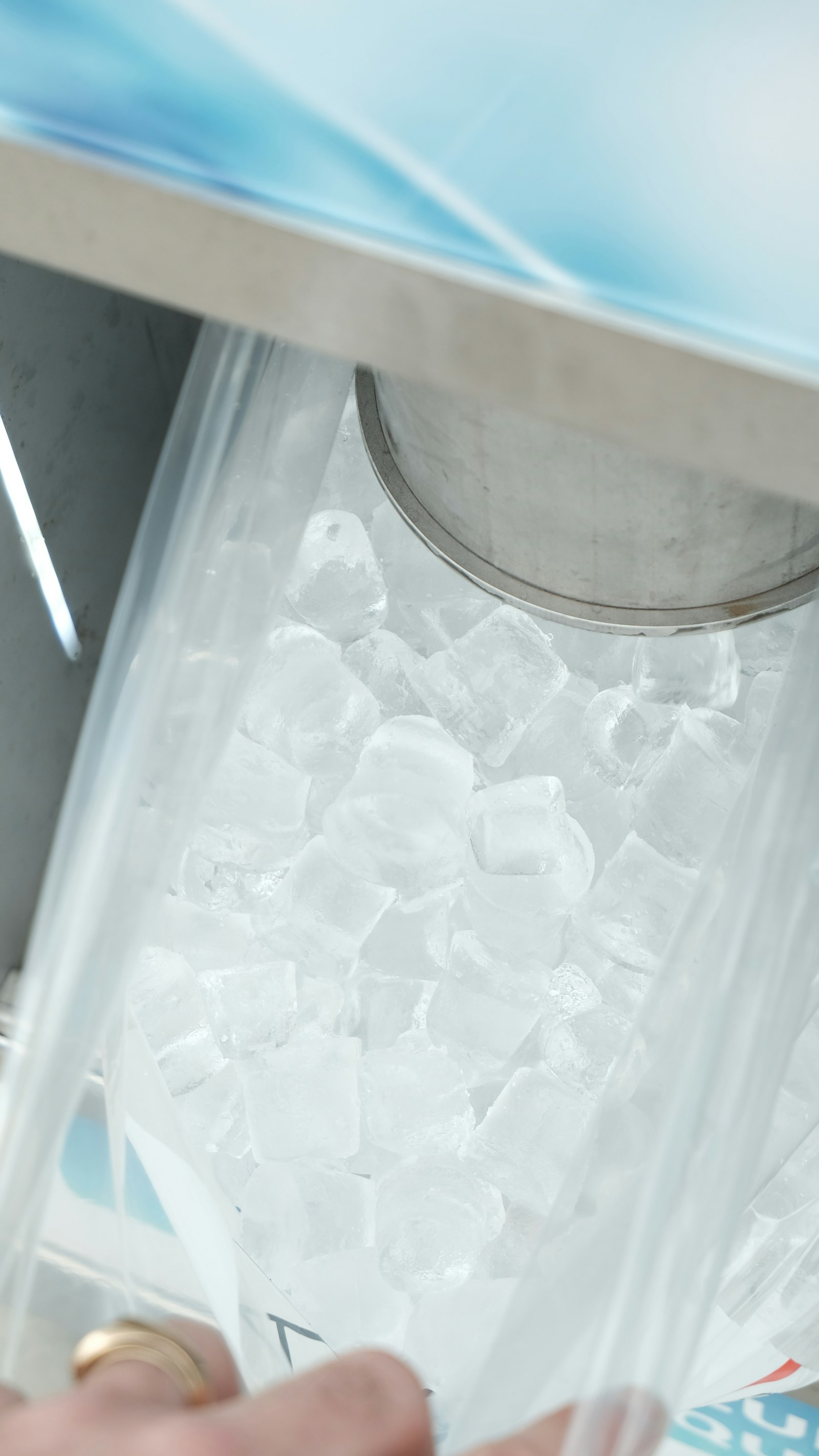
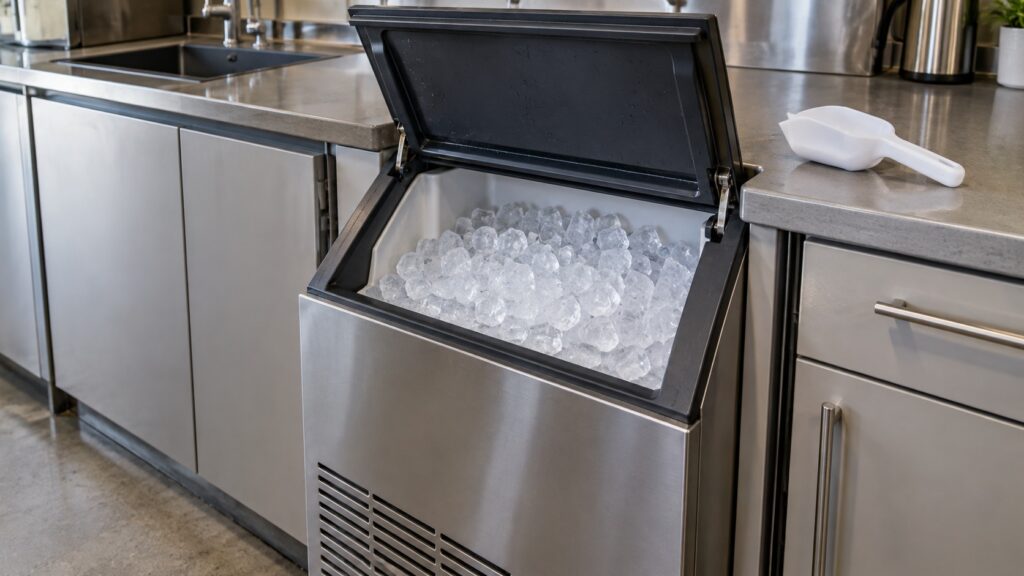
A Frigidaire ice machine — the standalone or undercounter unit that produces bar-style or gourmet ice continuously, not the smaller ice maker built into a refrigerator door — needs a cleaning schedule of its own because it runs a closed water loop around the clock. Scale from hard water and mineral buildup accumulate on the evaporator plate and in the water reservoir over months, and that buildup is behind most of the ice-quality and slow-harvest complaints these units get, well before any part actually fails.
Why does an ice machine need more upkeep than a refrigerator’s ice maker?
A refrigerator ice maker cycles occasionally and shares the fridge’s overall cooling system. A dedicated ice machine runs its own refrigeration and water circuit continuously, harvesting a new batch every several minutes for hours at a stretch. That constant water flow means minerals and scale accumulate faster, and a continuously running compressor and condenser fan pull in more dust over the same period. Both are simply a function of how much more work the machine does.
The bin itself adds a third factor a refrigerator ice maker does not have to deal with in the same way: a standalone ice machine’s storage bin sits at room temperature between harvests, rather than inside a sealed, cold refrigerator compartment, which is why odor and residue in the bin need their own attention separate from the machine’s water circuit.
What does scale buildup actually do to ice quality?
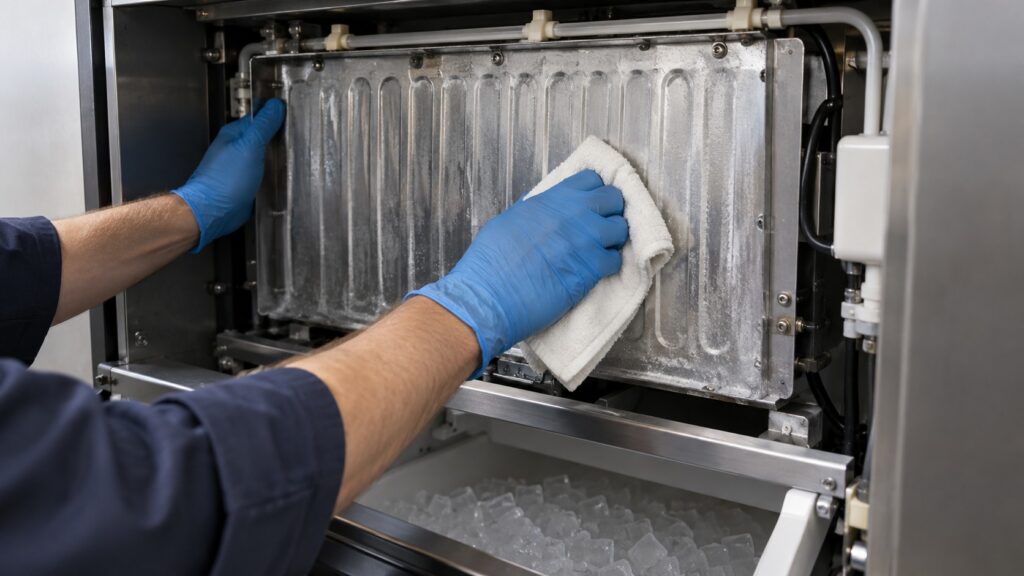
Mineral scale coats the evaporator plate where ice forms, and a coated plate transfers heat less efficiently — the machine has to run longer to freeze the same amount of water. The result shows up as cloudy or soft ice, slower harvest cycles, and eventually smaller cubes as the machine cuts a harvest short to keep up with demand. None of that means a part has failed; it means the plate needs cleaning before scale gets thick enough to affect the machine mechanically.
How often should the built-in clean cycle actually run?
Every three to six months for normal household or light-use settings, and closer to the three-month end in hard-water areas. The clean cycle circulates a descaling solution through the same water path the ice uses, which is why running it on schedule matters more for an ice machine than for almost any other kitchen appliance — skipping it does not just risk taste, it lets scale build somewhere the ice-quality symptoms will eventually trace back to.
What about the water filter?
The water filter feeding the machine is a separate wear item from the clean cycle, and it needs its own six-month replacement schedule, sooner if water hardness or sediment is high in your area. A filter that is not doing its job lets more mineral content reach the evaporator plate in the first place, which shortens the interval before the next clean cycle is actually needed.
Households on well water or in areas with known hard water should treat the six-month figure as an upper bound rather than a fixed rule. A filter working through harder water exhausts faster than one filtering already-soft municipal supply, and a machine on well water often benefits from checking the filter at the three-month mark at least once before settling on a longer-term schedule.
Does the condenser need cleaning too?
Yes, and it is the maintenance step most often skipped because it is easy to forget the machine has a condenser at all. Dust and kitchen grease settle on the condenser fins over months, and a coated condenser runs hotter and less efficiently, which shows up as the machine running constantly to keep up with the same harvest rate it used to hit easily. A vacuum with a brush attachment every few months keeps airflow where it needs to be.
A Frigidaire ice machine installed near a range or fryer collects grease on the condenser noticeably faster than one tucked into a bar or utility area, simply because airborne grease is heavier in the air near active cooking. Kitchens in that position may need condenser cleaning closer to every two months rather than every few, regardless of what the rest of the schedule says.
What should never be used to clean an ice machine?
Avoid vinegar and household descalers not specified for the machine, and avoid abrasive pads on the evaporator plate — both can etch or damage surfaces the manufacturer’s clean-cycle solution is formulated to leave alone. Anything that touches the ice path needs to be food-safe by design, not just effective at removing scale. The same caution applies to the bin interior: a household disinfectant that is perfectly safe on a countertop can leave a residue that affects ice taste for days if it is used inside the storage bin instead of a food-safe sanitizer made for the purpose. The drain line is worth including in the same clean cycle rather than treated as a separate task — most Frigidaire ice machines route melt water and cleaning solution through the same gravity or pump drain the ice itself eventually uses, and residue left in that line slowly narrows it until standing water becomes its own separate complaint.
Does the type of ice a machine produces change the cleaning schedule?
Gourmet or nugget-style ice machines generally need more frequent attention than bar-cube models, since the smaller, softer ice they produce forms through more surface contact with the evaporator and melts and refreezes slightly during storage. That extra contact means scale and mineral residue build up against a larger effective surface area for the same volume of water processed, which is why a household running a nugget-style machine heavily may find the three-month end of the clean-cycle range suits it better than the six-month end, even with otherwise average water hardness.
The bin behaves differently between the two styles as well. Nugget ice compacts and can partially fuse into clumps if it sits unused for several days, which is a storage habit to plan around rather than a sign the machine needs cleaning — running the machine regularly enough to cycle the bin keeps this from becoming a separate complaint on top of routine maintenance.
When is it worth calling instead of cleaning it yourself?
Call if the ice-full sensor light stays on with an empty bin, if harvest cycles have slowed noticeably even after a fresh clean cycle and filter, or if the machine runs constantly without ever completing a harvest. Those point past routine scale toward a sensor, valve or refrigeration-side issue. A consistent Frigidaire ice machine cleaning routine rules out scale as the cause before a technician ever needs to open the cabinet, which shortens the visit either way. Our technicians service Frigidaire ice machines and can tell scale buildup apart from an actual component failure before recommending a repair. We are an independent service, and pricing starts from a diagnostic visit with the estimate confirmed first.
If ice production has already dropped off, see why a Frigidaire ice machine stops making ice and what the ice-full light means. For the refrigerator-door ice maker instead of a standalone machine, see ice maker cleaning. Frigidaire ice machine repair covers what routine cleaning does not fix, and you can schedule a visit any time.