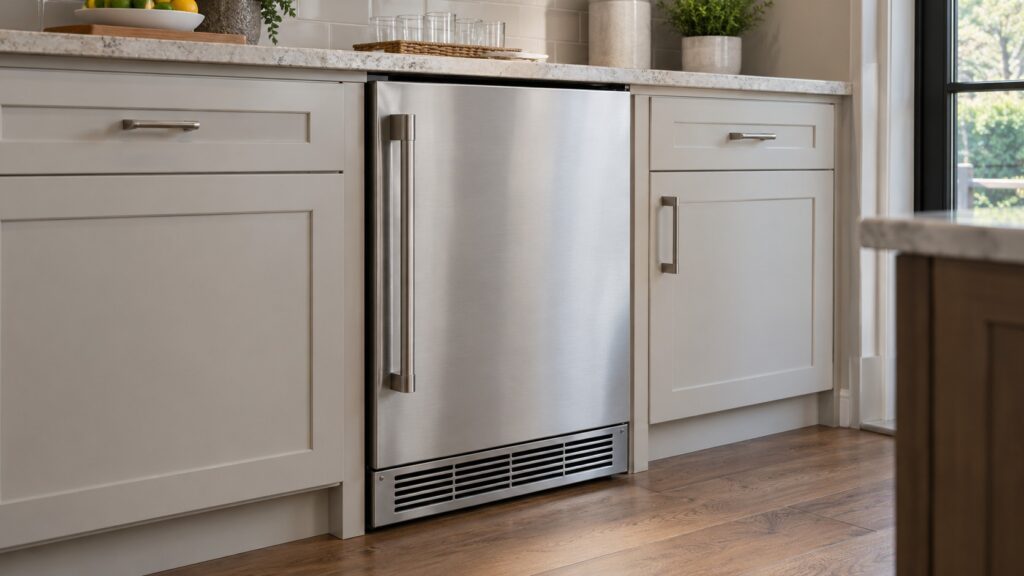
Frigidaire undercounter ice machine installation is four connections and one clearance rule: a cold water line, a drain, a grounded 120-volt outlet, a level cabinet, and a clear front grille. The Frigidaire Gallery FGIC3600-6COM is the model we see most, a 15-inch undercounter unit that makes up to 80 pounds of ice a day, stores 25 pounds, and is front-vented so it can sit inside cabinetry or stand free. Get those five things right on day one and the machine runs quietly for years; get one wrong and the symptoms, from slow ice to a puddle on the floor, show up within weeks.
What does a Frigidaire undercounter ice machine need before it goes in?
Before the unit is unboxed, check that the location offers three services within reach. You need a cold water supply with a shutoff valve, a drain that sits where the machine can reach it, and a grounded 120-volt outlet that is not shared with a heavy appliance. An ice machine draws little power, but it should not run on an extension cord or an outlet-strip adapter, and a dedicated outlet avoids nuisance trips. Choose a spot away from heat. A dishwasher, oven or sunny window next to the cabinet raises the room temperature around the condenser, and a warm condenser means slower ice.
The rated output of up to 80 pounds a day assumes moderate room and incoming water temperatures. A machine in a hot garage or a closed utility cupboard will make noticeably less, which is a placement problem and not a fault. Our guide to how a Frigidaire ice machine works explains why heat, water and airflow set the pace.
Why does front venting matter for a built-in installation?
An ice machine moves heat from the water to the room, and it needs air to do it. Many undercounter units breathe out of the back or sides, which is why they cannot be built in. The FGIC3600-6COM is front-vented: its intake and exhaust pass through the grille at the bottom front of the cabinet. That is what lets you recess it under a counter with cabinets on both sides, and it is also the one place you must never block. Do not hang a decorative panel over the grille, do not store boxes against it, and do not let a toe-kick filler cover it. A blocked grille looks like a dead compressor to a technician and reads as slow harvest to you.
Leave the gaps listed in your installation sheet at the top and sides so the cabinet can be moved for service, and keep the opening free of rough edges that could scratch the stainless. If the machine will stand free instead of built in, the front vent means the sides can sit against a wall or a cabinet without trouble, but the grille still needs open floor in front of it.
How should the water supply and drain be connected?
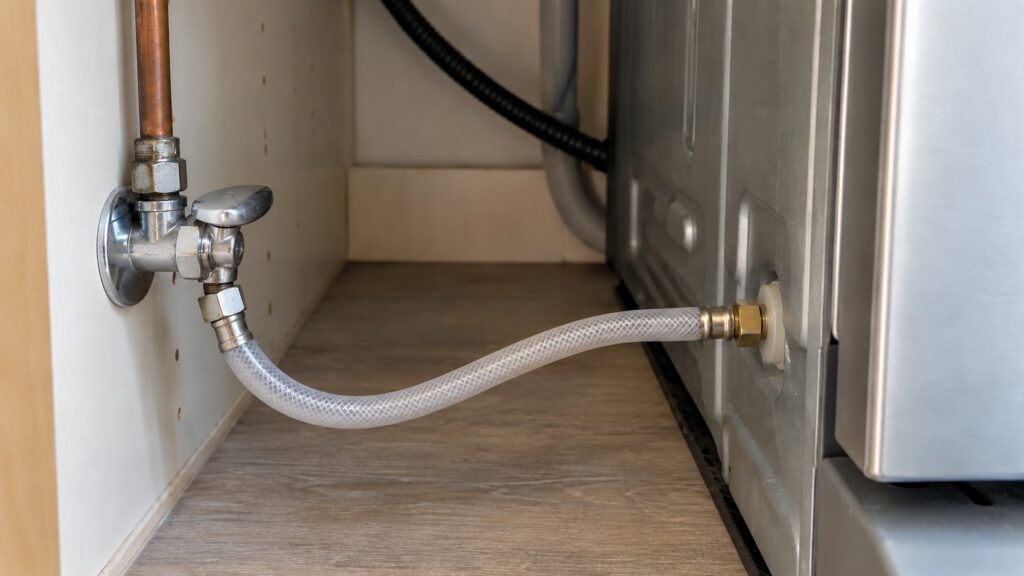
The water supply is a cold line fitted with its own shutoff valve, run to the inlet at the back of the unit with tubing that has no kinks. A shutoff valve beside the machine is not a luxury: you will close it for cleaning and for any service visit. Leave a little slack in the tubing so the machine can be slid forward without pulling on the fitting, and tighten the connection by hand and a short turn of a wrench, not hard enough to crush the washer. Turn the water on slowly and look at every joint.
The drain is where the most installations go wrong. Melt water from the bin, and later the water from a cleaning cycle, has to leave the machine. Some undercounter units drain by gravity and others use a pump, and the manual for your model says which. A gravity drain only works if the outlet on the machine sits above the drain it feeds, with a steady downward slope all the way and no sags that hold water. Water that sits in a sag turns slimy, smells, and eventually backs up into the bin. If there is no drain low enough, the answer is a pumped arrangement, not a flatter hose.
After the first fill, check the joints again the next morning. A drip from a fitting is much easier to catch on day two than a swollen cabinet floor on day thirty.
How do you level it and start it up?
Stand the unit in its opening and set the adjustable feet so it sits level from side to side and from front to back. A tilt toward the back lets water pool where it should drain, and a tilt to one side can leave the harvest uneven. If the machine traveled on its side, stand it upright for the length of time the manual specifies, often several hours, before you plug it in, so the compressor oil settles. Then connect power, open the water, and let the first cycle run.
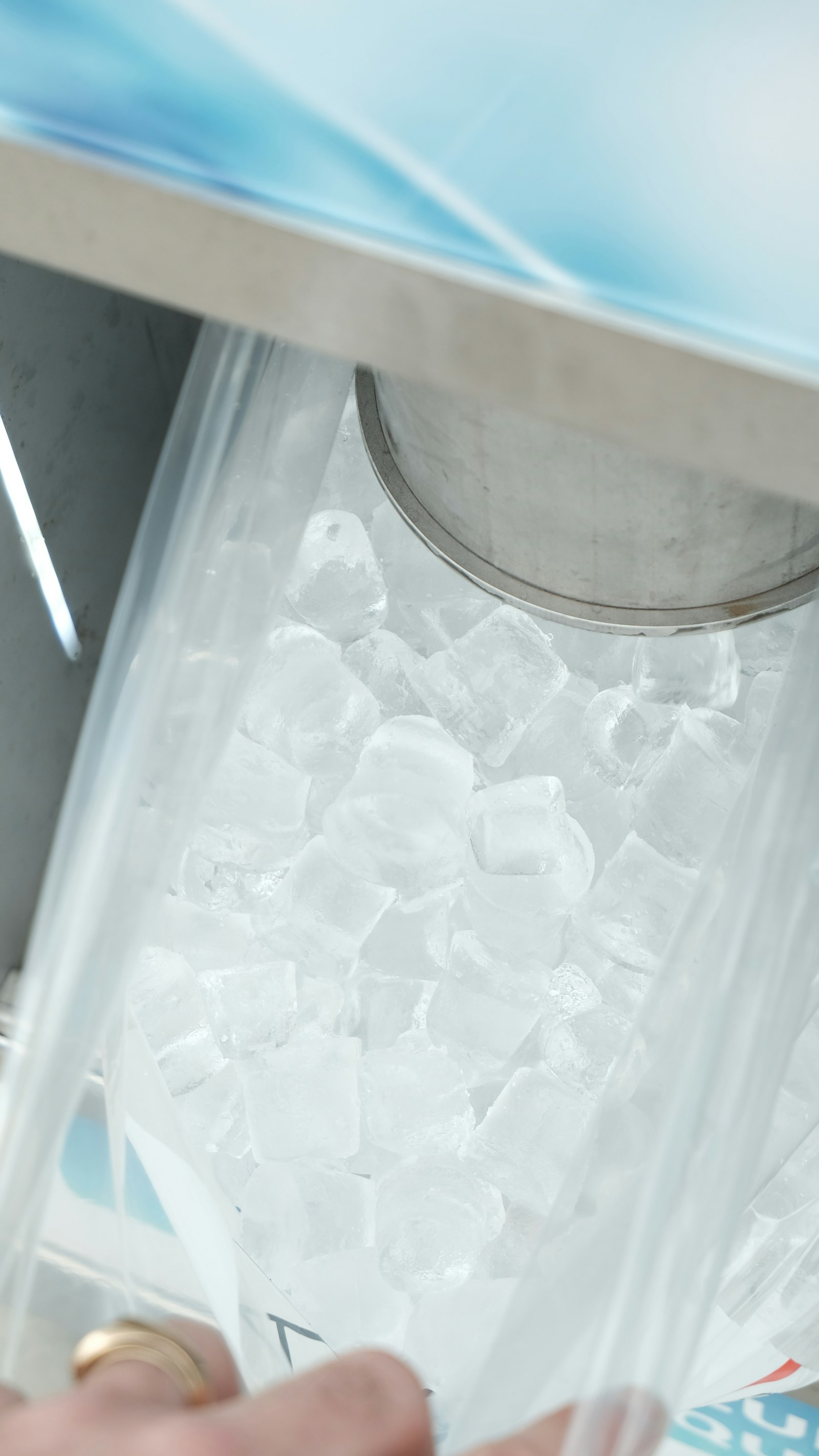
The first batches of ice are not for the drink glass. Discard the first bin, wipe the inside with a mild cleaner as the manual describes, and rinse. New plastic and a freshly flushed water line both leave a taste that disappears after the first day. Expect the unit to take a few hours to start releasing ice; it is making, freezing and then harvesting, and nothing happens until the first cycle is complete.
What problems come from a poor installation?
Most early callbacks on ice machines trace to placement and plumbing, not parts. A grille covered by a panel or a stored box gives slow ice. A kinked or half-closed supply line produces thin, small or cloudy ice and may light the add-water indicator, which our add-water light page explains. A drain with a sag gives odor and standing water. A warm location gives low production, and our slow harvest page describes how it looks. If nothing comes out at all, read why a Frigidaire ice machine is not making ice before anything else.
The ice machine also needs cleaning on a schedule, and the installation affects how easy that is. A shutoff valve within reach and a unit that slides out smoothly make cleaning a ten-minute job instead of a dreaded one. Our ice machine cleaning and maintenance guide sets out the routine.
Should you install it yourself?
A competent homeowner can set a plug-in undercounter unit in an opening that already has water, drain and power at hand. The jobs that call for a licensed plumber or electrician are the new ones: running a new supply line, cutting into a drain, or adding an outlet. Do those to your local code, and keep the machine unplugged and the water off while anyone works on the connections. If you want a technician to check a finished installation or look at a machine that is making less ice than it should, our Frigidaire ice machine repair service can do it, and you can book a visit online.