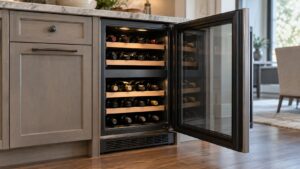
Frigidaire wine cooler cleaning is simple: switch the cooler off, take out the bottles and shelves, wash the inside with mild soap and warm water, wipe the door seal, dry everything and keep water away from the controls and the vents. Then restart the cooler and let it return to its set temperature before you reload it. Use nothing that smells strongly, because wine takes up odors, and do not spray or pour water onto anything electrical.
How often should a wine cooler be cleaned?
A wine cooler holds sealed bottles in a cold, dry space, so it stays cleaner than a refrigerator. A full clean once in a while is enough, plus a wipe whenever something spills or a bottle leaks. Choose a time when the cooler is lightly stocked, so the bottles are out of the cabinet for as short a time as possible. Check the interior for a musty smell, a sticky shelf or dust on the glass, since each of those tells you that it is time. We do not give a fixed interval, because it depends on how the cooler is used and where it stands.
How do you prepare for cleaning?
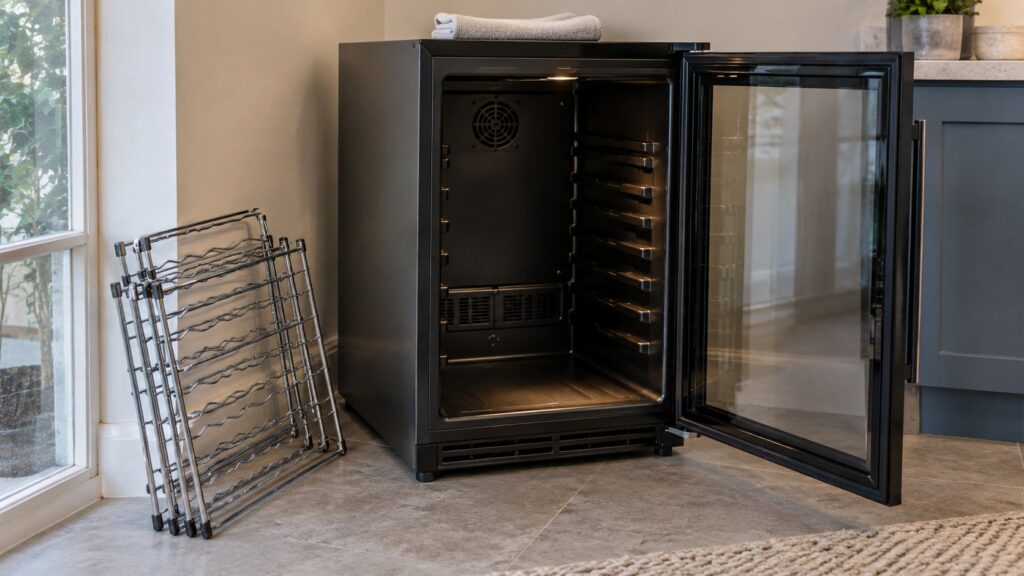
Switch the cooler off with its power control and, if you can reach the plug and the floor and your hands are dry, unplug it. If water is on the floor near the outlet, switch off the breaker at the panel while standing on a dry surface instead, and never pull a plug from a wet outlet. Move the bottles to a cool, dark place out of the sun, laid on their sides. Take out the shelves and any trays. Wine is happier if it is not moved much, so plan the whole job before you start.
What should you use to clean the inside?
Mild dish soap in warm water on a soft cloth or sponge is enough. Wipe the walls, the floor of the cabinet and the glass door, working from the top down. Rinse the cloth often and wring it well, so that you wipe and do not flood. Avoid abrasive pads, bleach and perfumed cleaners, which can scratch surfaces and leave a smell that the wine will pick up. A cloth dampened with plain water is a good way to rinse off any soap. Keep water away from the control panel and from any vents, and do not let it run into the bottom of the cabinet.
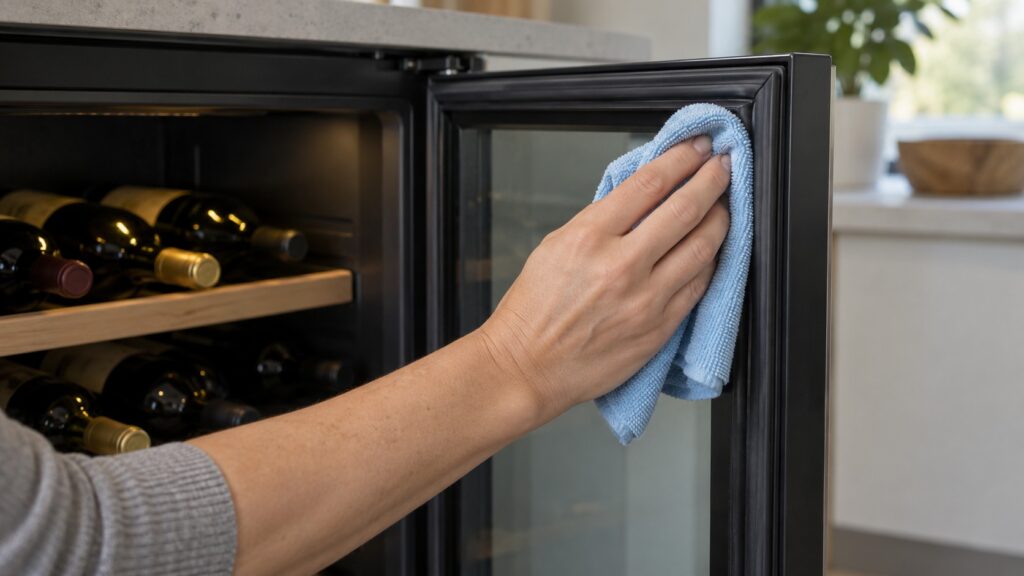
How do you clean the shelves and the door seal?
Wash wire or wooden shelves at the sink with mild soap, rinse them and dry them before putting them back. Wipe the rubber door seal with a damp cloth, including the folds, because dust and spills collect there and keep the door from closing tightly. A seal that does not close properly lets in warm air and makes the cooler work harder, which our wine cooler temperature problems guide lists among the causes of poor temperature holding. Check the seal for cracks while you clean it. If a door sags or the seal is damaged, that is a repair.
What about a spill, a broken bottle or a musty smell?
Deal with a spill straight away. Take the bottles out, wipe up the liquid with a damp cloth and dry the spot, because sugar and wine residue turn sticky and attract dust. If a bottle has broken, wear gloves, lift out the large pieces and wipe the rest with a cloth, and check that nothing has run under the shelves or toward a vent. For a musty smell, wash the interior and seal as described, then leave the door open for a while so the cabinet airs out before you restart it. A smell that returns after a clean usually points to moisture, a seal that does not close or a cabinet in a damp room. Moving the cooler or fixing the seal is the answer, not a stronger cleaner.
What should you not clean yourself?
The vents and the area behind or beneath the cooler can collect dust, and a light vacuum along the outside of a vent is fine. Do not remove any panel, reach into the back or touch the cooling parts. The compressor, fan and sensors are a technician’s work. Do not pour water into the base. Our wine cooler how it works guide explains the main parts so you know what is behind the panels, but not so that you open them.
How do you restart it and put the bottles back?
Once the inside and the shelves are dry, put the shelves back, close the door, plug the cooler in or restore the breaker and switch it on. Set the temperature as your owner’s manual describes. Let it reach its set temperature before loading the bottles. Our model page for the FFWC3822QS lists a 41 to 64 degrees F range across two zones, and your own model has its own range in the manual. Then reload the bottles on their sides as shown in our wine cooler storage tips.