A wine cooler is not a small refrigerator with a glass door, and treating it like one is why bottles that were supposed to improve end up flat and tired. Good frigidaire wine cooler storage comes down to four things — a steady temperature, enough humidity, no light and no vibration — and the appliance handles two of them for you. The other two are down to where you put it and how you load it.
Steady beats cold
The single most damaging thing for wine is not being a few degrees too warm. It is moving up and down repeatedly. Every swing expands and contracts the wine and the air in the bottle’s neck, which works air past the cork over time and oxidizes what is inside.
That is why a cabinet holding a steady temperature outperforms a kitchen refrigerator set colder, and why the placement of the appliance matters so much. A wine cooler in a hot garage or against a sunny wall spends its life fighting the room, and its internal temperature moves with the seasons whatever the display says.
One zone or two, and how to use what you have
A single-zone cabinet holds one temperature throughout. If you are storing rather than serving, set it around the long-term storage figure and leave it alone — that is a compromise that suits everything reasonably and nothing perfectly, and it is the correct choice for a collection.
A dual-zone cabinet lets you run a serving temperature in one compartment and a storage temperature in the other. The mistake is treating the two zones as “reds” and “whites” permanently, when the more useful split is “drinking this month” and “keeping”. Move bottles up to the serving zone a day or two before you want them, and the cabinet does the work you would otherwise do with an ice bucket.
Our how it works guide covers the cooling technology behind both, which matters because thermoelectric and compressor cabinets behave differently in a warm room.
Humidity, corks and why bottles lie down
A cork needs to stay slightly damp to keep its seal. It dries from the inside if the bottle stands upright, and from the outside if the surrounding air is very dry. A dried cork shrinks, admits air, and the wine behind it ages far faster than it should.
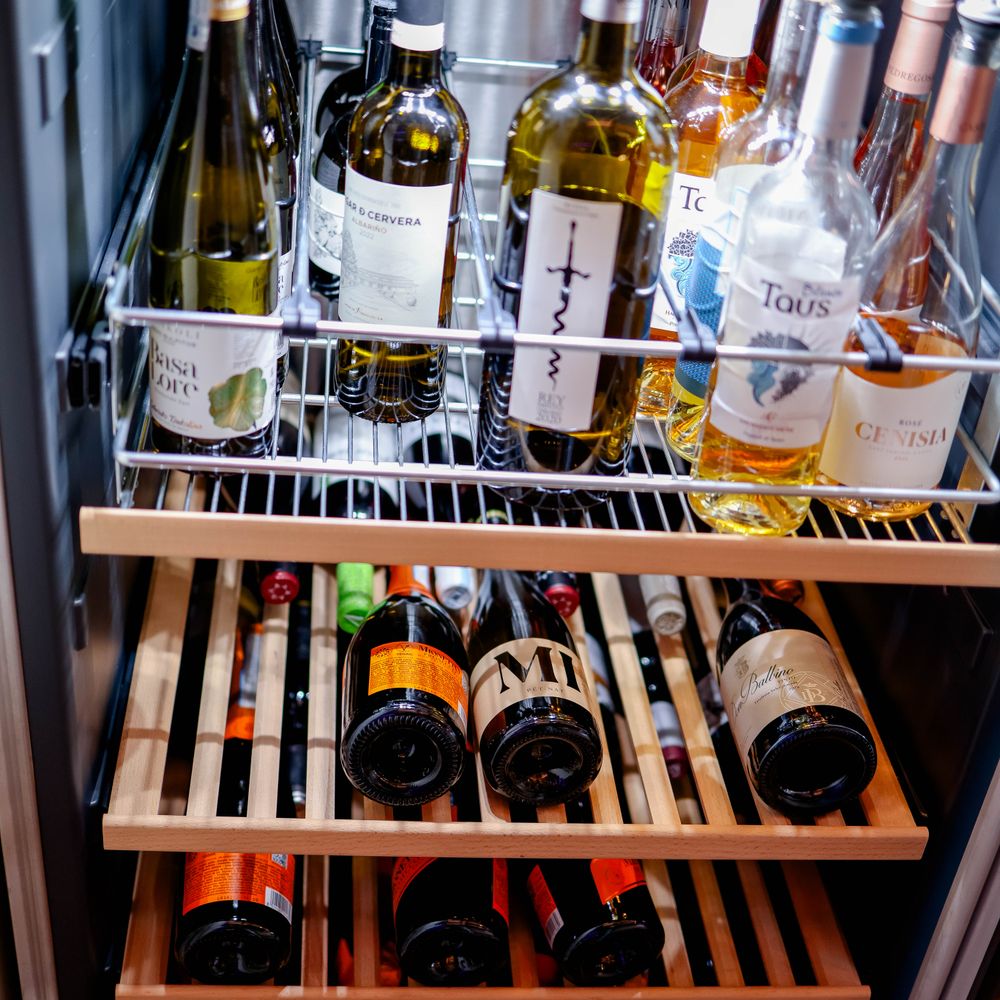
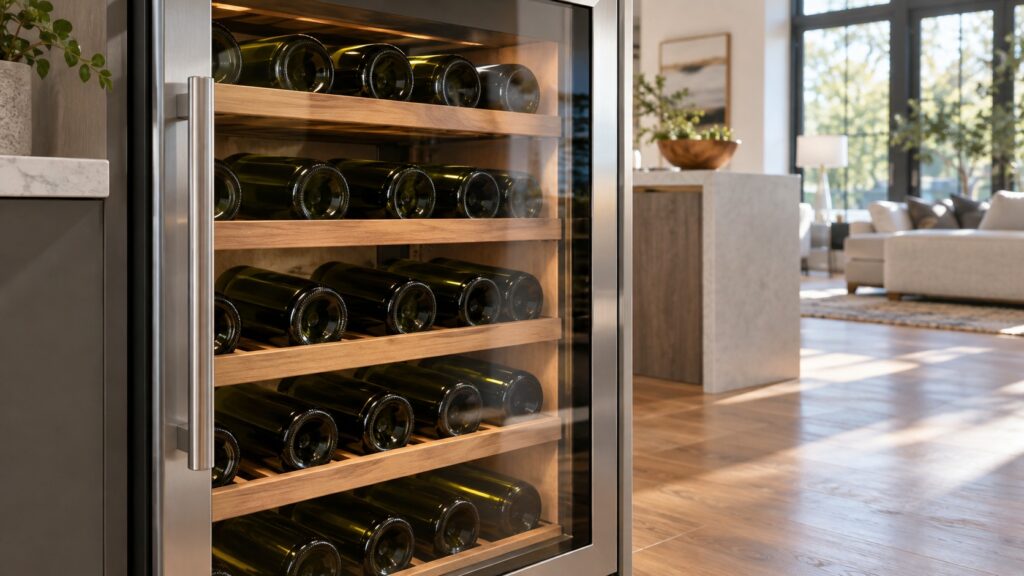
Storing bottles on their side keeps the wine against the cork, which solves the inside half. The appliance’s own humidity handles most of the outside half — wine cabinets are designed to run damper than a kitchen refrigerator, which is one of the real differences between the two. If you live somewhere very dry and are storing for years, a shallow dish of water in the cabinet is a reasonable belt-and-braces measure.
Screw-capped bottles do not care, and can stand upright if that suits your shelves better.
Light and vibration
Ultraviolet light degrades wine, which is why bottles are made of dark glass in the first place. Most cabinet doors are treated glass and the interior light is usually LED, but the habit worth keeping is simply not leaving the light on and not siting the cabinet in direct sun.
Vibration is the quieter problem. Constant small movement disturbs sediment and, over years, is thought to accelerate aging. It is an argument against storing bottles on top of a laundry appliance, next to a door that slams, or in a cabinet that is not level and rocks each time the compressor starts. Leveling the appliance is a five-minute job with real benefit here.
Built-in or freestanding, and why it is not cosmetic
A freestanding cabinet rejects its heat out of the back and sides, and it needs open air around it. A built-in model vents at the front through a grille at the base, which is what allows it to sit flush under a counter between cabinets.
Putting a freestanding unit into a cabinet opening is one of the most common causes of a wine cooler that cannot hold temperature, and it is not a fault — the appliance is simply being asked to breathe through a wall. It also shortens the life of the compressor, because it runs constantly and hot.
If the cabinet is going under a counter, confirm the model is rated for built-in installation before you fit it. Our wine cooler buying guide covers the distinction alongside capacity and zone choice.
Loading it so it keeps working
- Do not block the interior airflow. Shelves are spaced to let air move; packing bottles into every gap defeats that.
- Keep the cabinet reasonably full. A full cabinet has more thermal mass and rides out door openings better.
- Heavier bottles low. Sparkling wine and magnums are heavy, and shelves have limits.
- Label the shelf, not the bottle. Chilled labels come off, and a shelf card means less time with the door open.
- Leave the rear clearance the manufacturer asks for. A cabinet pushed tight to a wall cannot reject its heat.
When the wine tells you something is wrong
Pushed corks, seepage around the capsule, or a noticeable change in a wine you know well all point at temperature excursions rather than at bad luck. Check the cabinet against an independent thermometer rather than the display, over a couple of days, and look at where the appliance stands and how often the door opens.
If the cabinet genuinely will not hold its setting, our temperature problems guide and the not cooling guide work through the causes in order.
When to call
Call when the cabinet will not reach or hold its set temperature, when it runs constantly, when condensation collects inside, or when the door seal no longer closes evenly. On a collection of any value, those are worth acting on quickly rather than watching.
We are an independent repair company and not a factory service arm. Pricing starts from a diagnostic visit and we confirm the estimate before any work begins. Frigidaire wine cooler repair covers cooling, controls, seals and fans, and you can schedule a visit online.