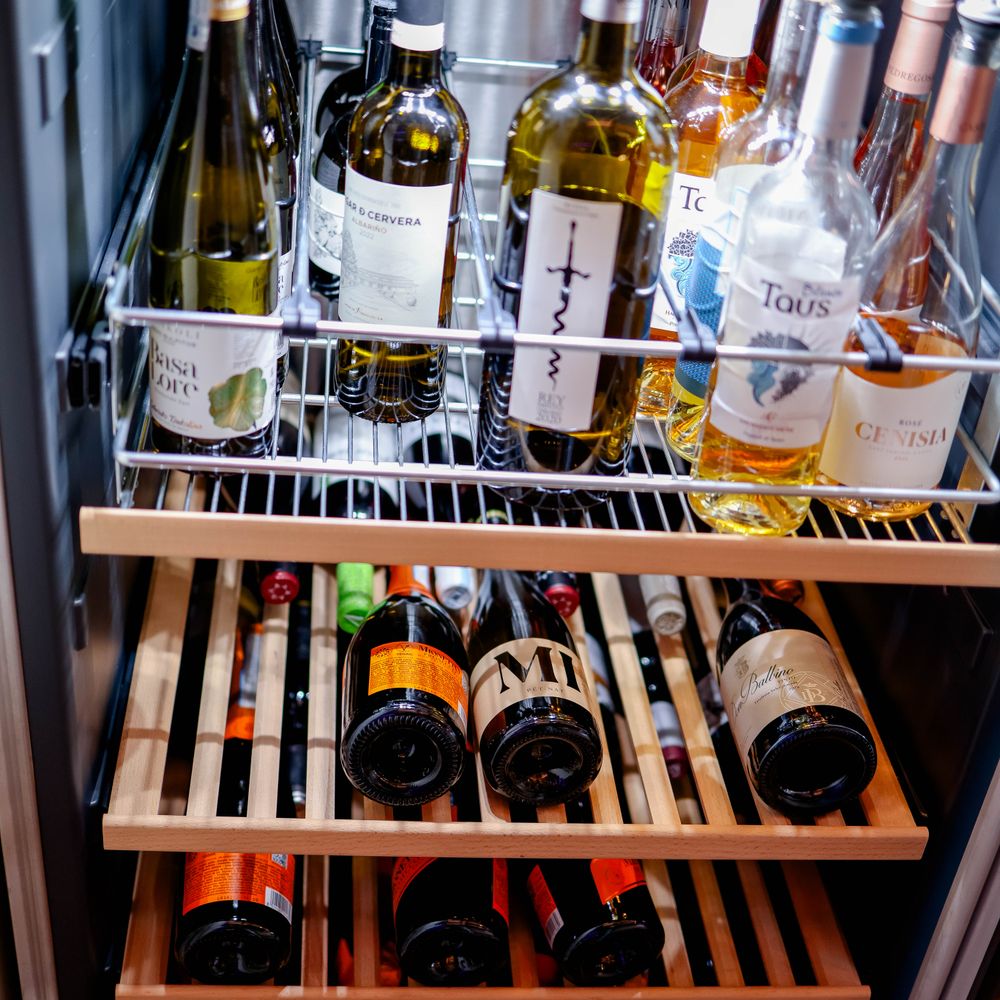
Understanding frigidaire wine cooler repair cost before you book makes it easier to decide whether a fix is worth it. As with any refrigeration appliance, the part that failed sets the price: a temperature sensor, fan, or door gasket is inexpensive, while a compressor or a sealed-system refrigerant repair sits at the top of the range. Our pricing is always framed honestly as a “from $X” starting point plus a trip-and-diagnostic fee, never a flat quote.
The diagnostic fee covers the visit and the testing to identify the problem, and it is typically credited toward the repair when you approve it.
What drives frigidaire wine cooler repair cost
The total is the part price plus the labor to fit it. The inexpensive, common repairs are the thermistor (temperature sensor), the interior or condenser fan, the door gasket, the UV-tinted glass door hinge, and the interior LED. The costly repairs are in the cooling system: the compressor on a compressor model, the thermoelectric module on a thermoelectric model, the control board, and any refrigerant leak that must be found, repaired, and recharged. Sealed-system work is technician-only by law and is usually the line where an older wine cooler stops being worth repairing.
Typical repairs and rough ranges
- Temperature sensor (thermistor): a low-cost part that fixes false readings and many temperature complaints.
- Fan or door gasket: inexpensive parts that restore airflow or a proper seal.
- Control board: a mid-to-higher repair on electronic models, since the board is the main expense.
- Compressor, thermoelectric module, or sealed-system leak: the costliest repairs, where replacement often makes more sense on an older or smaller unit.
Most wine cooler repairs fall between an inexpensive sensor or gasket job and a far pricier sealed-system repair, depending on the part and labor. Before booking, rule out the no-cost fixes in our guides on a wine cooler not cooling and wine cooler temperature problems — room temperature and door seals account for many calls.
How unit size shifts the math
The size and type of cooler heavily influence whether a repair pays off. On a large built-in or freestanding cabinet that holds dozens of bottles, even a higher-cost board or fan repair is usually worth it because the unit itself represents a real investment. On a small countertop or thermoelectric cooler, the picture flips: the part and labor for a cooling-system problem can rival or exceed the price of simply buying a new unit, so replacement often wins. Knowing your cooler’s class before the technician arrives helps you set a sensible ceiling on what you are willing to spend on a repair.
Repair or replace?
A sensor, fan, gasket, or hinge is almost always worth fixing on a cooler that is otherwise sound, particularly on a larger built-in unit. A failed compressor or a refrigerant leak on a small countertop or older freestanding model is where replacement usually wins, because the repair can approach the cost of a new cooler. Comparing your unit against current Frigidaire wine cooler models helps you weigh it up.
Book Frigidaire wine cooler service
For a firm number on your specific problem, our experienced, independent technicians diagnose Frigidaire wine coolers and repair them with genuine OEM parts and a 30-day labor warranty. Schedule a visit, see our wine cooler repair service, or confirm your model details at frigidaire.com.