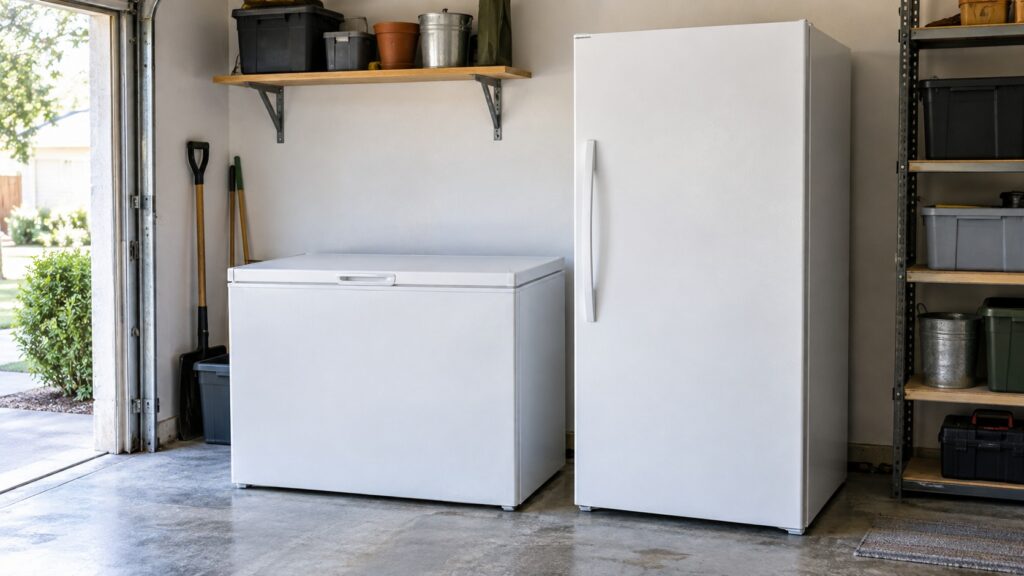
The chest vs upright freezer decision gets made on price and then regretted on either energy bills or on never finding anything again. Both formats keep food frozen perfectly well; they fail you in opposite directions, and which one is right depends less on the specification than on how you actually shop, where the appliance will live, and how often you open it.
The physics that decides most of it
Cold air is denser than warm air and it sinks. Open a chest freezer and the cold sits in the box; open an upright and a sheet of it pours out across your feet and warm room air takes its place. That single fact drives most of the practical differences between the two.
It is why a chest holds temperature better in normal use, why it survives a power outage considerably longer with the lid closed, and why an upright’s compressor runs more in a household that opens it often. It is also why the difference narrows almost to nothing in a freezer that gets opened twice a week.
Space, and the number that is not on the label
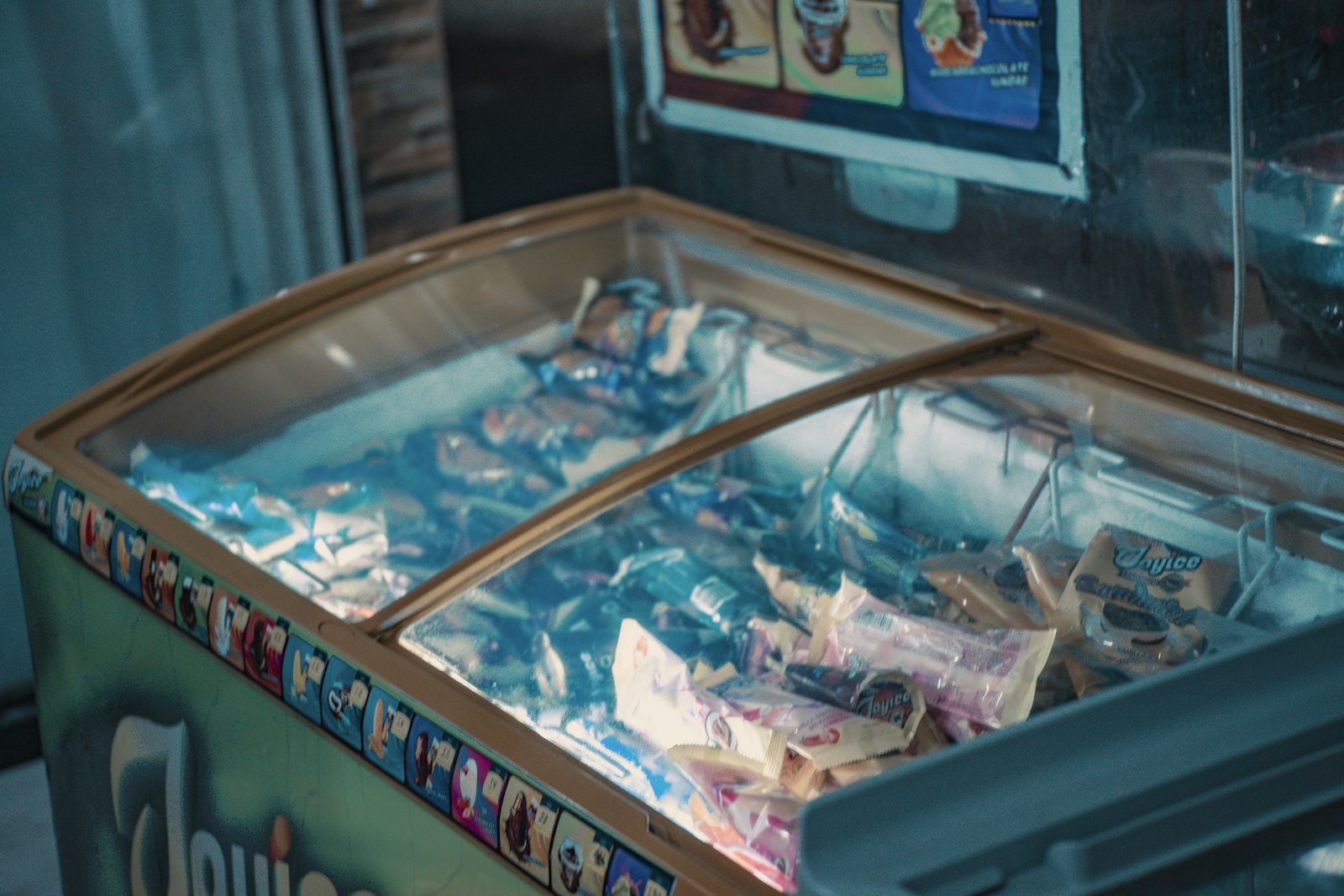
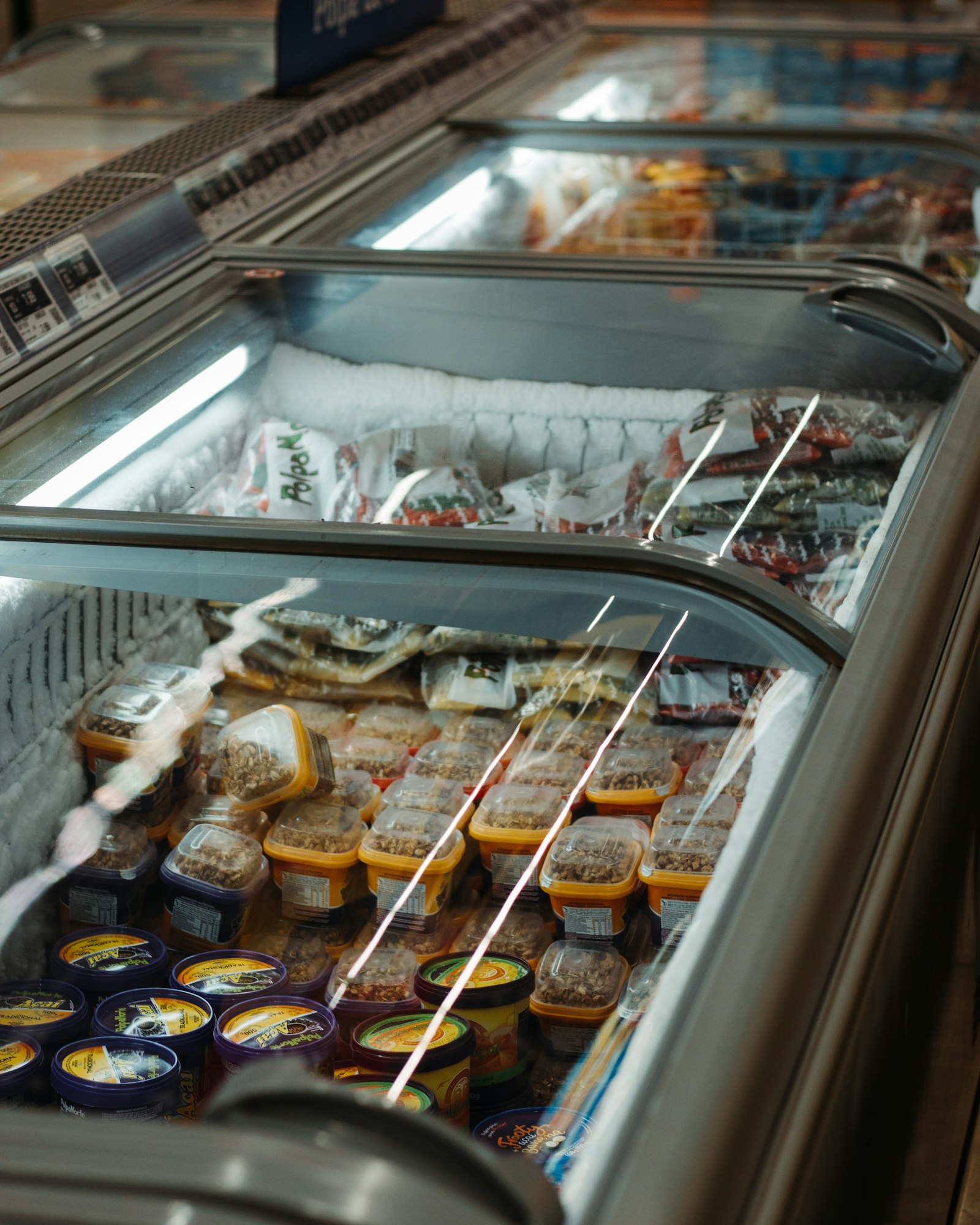
Stated capacity is the internal volume, and a chest gives you more of it for the same outside dimensions because it has no shelves, no drawers and thinner door structure. In practice a chest is usually the better value on capacity per dollar and on capacity per cubic foot of appliance.
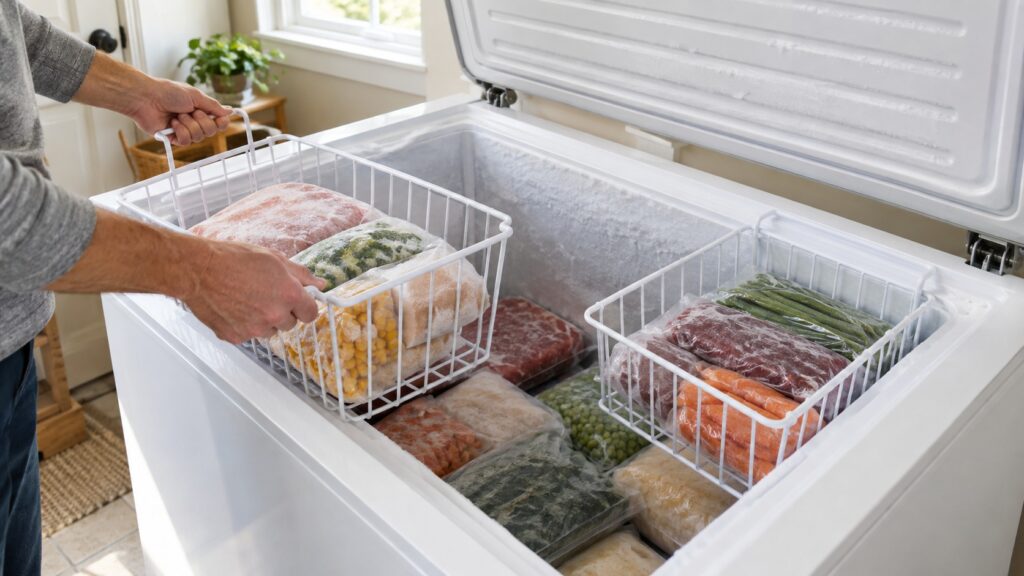
But usable capacity is a different number from stated capacity. A chest is a deep box: the bottom layer is genuinely hard to reach, and without baskets and a discipline about what goes where, the lower third becomes an archaeological site. An upright’s shelves waste some volume and lose all of it to visibility — you see everything, so you use everything.
If you buy half a cow once a year, the chest is obviously right. If you take out two things every evening, the upright will save you more than it costs.
Frost, defrost and the maintenance you are signing up for
Most chest freezers are manual defrost. Frost accumulates on the walls and once or twice a year you empty the freezer, let it thaw and mop it out. It is an afternoon, it is tedious, and it is also why chest freezers are mechanically simple and tend to last.
Most uprights are frost-free, which means a heater periodically melts the evaporator frost and a drain carries the water away. That is far more convenient and it adds parts that can fail — a defrost heater, a timer or control, a thermostat and a drain that can block. It also dehydrates unwrapped food faster, so packaging matters more.
Neither is better in the abstract. One trades your time for simplicity, the other trades complexity for your time. Our frost buildup guide covers what is normal and what is not in both.
Where it will actually stand
A chest needs floor area and clearance above for the lid to open fully, which rules it out of many basements with low joists and most utility closets. An upright needs door swing clearance and enough height, and it will not go under a counter unless it is an undercounter model.
Garage and basement placement is worth a specific check. A freezer in an unheated garage can struggle in cold weather, because the thermostat sees a cold room and stops calling for cooling while the contents slowly warm. If the appliance is going somewhere unheated, look for a model rated for that. Our freezer installation guide covers the placement requirements in detail.
Energy, noise and outages
Chest freezers generally use less energy for the same capacity, for the reason described above plus better insulation on all six sides. The gap is largest in a household that opens the freezer often and smallest in one that does not.
On outages, a full chest freezer with the lid kept shut holds safely far longer than an upright in the same circumstances, and a full freezer of either type holds much longer than a half-empty one. That last point is free: fill empty space with bottles of water and you have bought yourself hours.
Organizing either one so it stays usable
The failure mode of a freezer is not mechanical. It is that food goes in, disappears, and comes out two years later as a bag of ice crystals nobody can identify. Both formats need a system, and the system is the same: label everything with contents and date, keep like with like, and work oldest first.
In a chest, that means baskets and zones — one basket for meat, one for prepared meals, one for bread and pastry — and a rule that nothing goes to the floor of the box without a label. In an upright, it means giving each shelf a purpose and resisting the temptation to slide something onto whichever shelf has a gap.
A sheet of paper taped to the lid or door with a running list costs nothing and saves more food than any feature you can pay for. Our freezer maintenance guide covers the routine that keeps either format running well.
A short way to choose
- Bulk buying, hunting, garden harvests, long storage — chest.
- Daily meals, meal prep, a working second freezer — upright.
- Tight floor space, needs to live in a kitchen or hallway — upright.
- Unheated garage, infrequent access, outage resilience matters — chest, rated for the location.
- Anyone with back trouble — upright, regardless of the rest.
When to call
Call when a freezer of either type is not holding temperature, when frost is building far faster than it used to, when water is pooling under an upright, or when the compressor runs constantly. Our not freezing guide covers the first checks.
We are an independent repair company and not a factory service arm. Pricing starts from a diagnostic visit and we confirm the estimate before any work begins. Frigidaire freezer repair covers thermostats, defrost, seals and sealed systems, and you can schedule a visit online.