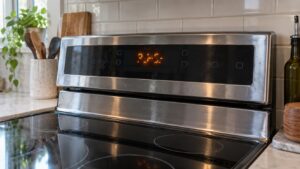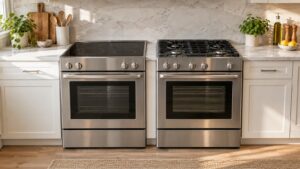
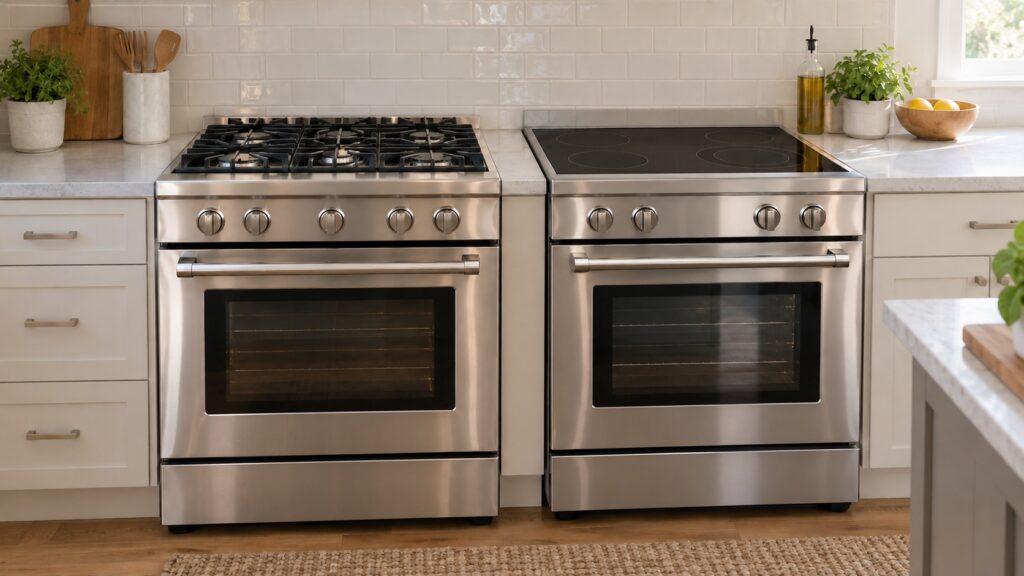
The Frigidaire FGEF3036TF is the electric version and the FGGF3036TF is the gas version of the same 30-inch Gallery freestanding range. Both are discontinued, both carry Quick Bake fan convection, Steam Clean and Self-Clean, and both come in a smudge-proof stainless finish. The real choice is not the model number but the fuel you have at the wall: a gas line and a gas shutoff valve point to the FGGF3036TF, a 240-volt range outlet points to the FGEF3036TF, and the two are not interchangeable without a licensed installer.
What is the difference between the FGEF3036TF and the FGGF3036TF?
Reading the two model pages on this site side by side, the differences come down to fuel, surface and oven size. The FGEF3036TF lists a 5.4 cubic foot oven and an electric cooktop. The FGGF3036TF lists a 5.0 cubic foot oven and gas burners, led by a 17,000 BTU power burner. Everything else on the spec sheets matches: 30 inches wide, freestanding, Gallery trim, Quick Bake fan convection, Steam Clean, Self-Clean and a smudge-proof stainless finish.
Because both ranges were sold as an earlier Gallery generation, they use Quick Bake fan convection rather than the dedicated True Convection found on some newer Frigidaire ranges. If you are comparing a different series, our FFEF3054TS vs FFGF3054TS guide covers the 3054 pair in the same way.
Should you buy the electric FGEF3036TF or the gas FGGF3036TF?
Start with the utility you already have. An electric range needs a dedicated 240-volt circuit and the right outlet. A gas range needs a gas supply with a shutoff valve and a standard 120-volt outlet for the igniters and controls. Converting a kitchen from one to the other is a job for a licensed electrician or gas fitter, so treat the fuel as fixed.
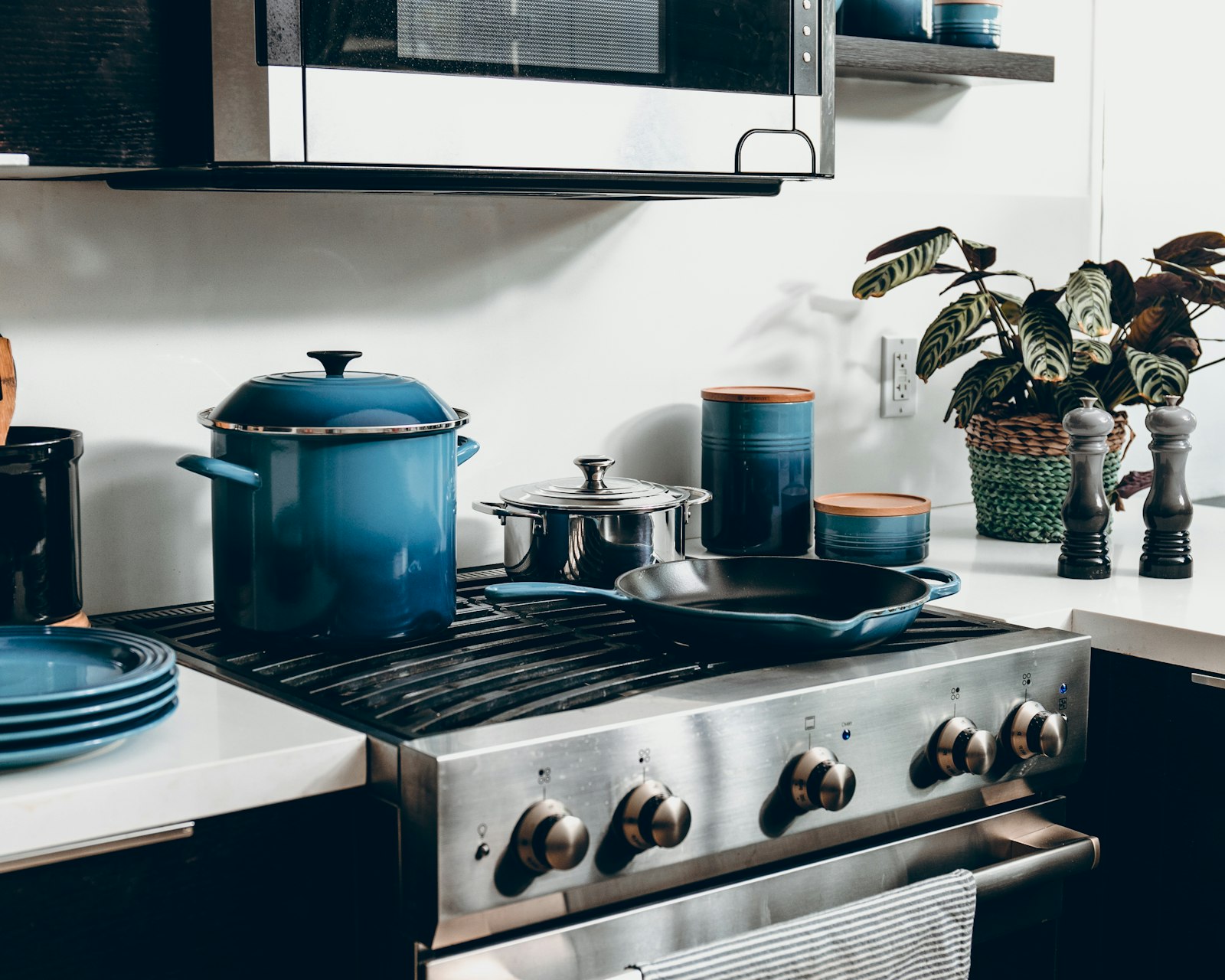
If both are available, think about how you cook. The gas FGGF3036TF gives you visible flame and a high-output power burner for fast boiling, while the electric FGEF3036TF has a flat, easy-to-wipe surface and a slightly larger oven cavity by the listed volume. Neither range is a current model, so the question that matters more is the condition of the specific unit in front of you.
What should you check on a used FGEF3036TF or FGGF3036TF?
Both ranges are old enough that a used one has a history. Before you buy or keep one, run through a short list:
- Look at the oven door glass and the gasket for wear, and make sure the door closes evenly.
- Press every keypad pad and confirm the display responds without flicker or missing segments.
- Run a bake cycle and confirm the oven reaches heat in a reasonable time and holds it.
- On the gas FGGF3036TF, check that every burner lights evenly and the flame is steady. If you ever smell gas, do not touch switches or light anything: leave the house and call your gas utility or 911 from outside.
- On the electric FGEF3036TF, check that every surface element heats and that no element sparks or glows unevenly.
Our Frigidaire range burner not lighting guide explains what a weak or clicking burner usually means, and the Frigidaire oven not heating guide covers the oven side.
Which error codes can the FGEF3036TF and FGGF3036TF show?
The model pages for both ranges describe the same oven code families. Gas surface burners carry no codes and are diagnosed by symptom alone, so on the FGGF3036TF the codes cover the oven only.
Each one has its own page: range F10, range F11, range F30 and range F90. Read the code, then decide: a sensor or keypad fault can be diagnosed and fixed, but an F10 means turn the power off at the breaker and stop using the range.
Is it worth repairing or replacing an older Gallery range?
Because the FGEF3036TF and FGGF3036TF are discontinued, parts availability and the age of the unit drive the decision more than the model name. A sensor, a keypad or a door-lock motor is a contained repair on a range that is otherwise sound. A range with several failing systems at once, a cracked oven cavity or a recurring F10 is a different conversation. Our Frigidaire range repair or replace guide walks through that decision, and a technician can tell you in one visit which side of the line your range sits on.
Can you install either range yourself?
Sliding an electric range into place and plugging it in is within reach for many owners, but the anti-tip bracket, leveling and the clearances in the owner’s manual are not optional. A gas range adds a gas connection, and that part belongs to a licensed professional every time, followed by a leak check done the way your installer and the owner’s manual describe. Our Frigidaire range installation guide lists what to prepare before delivery day.