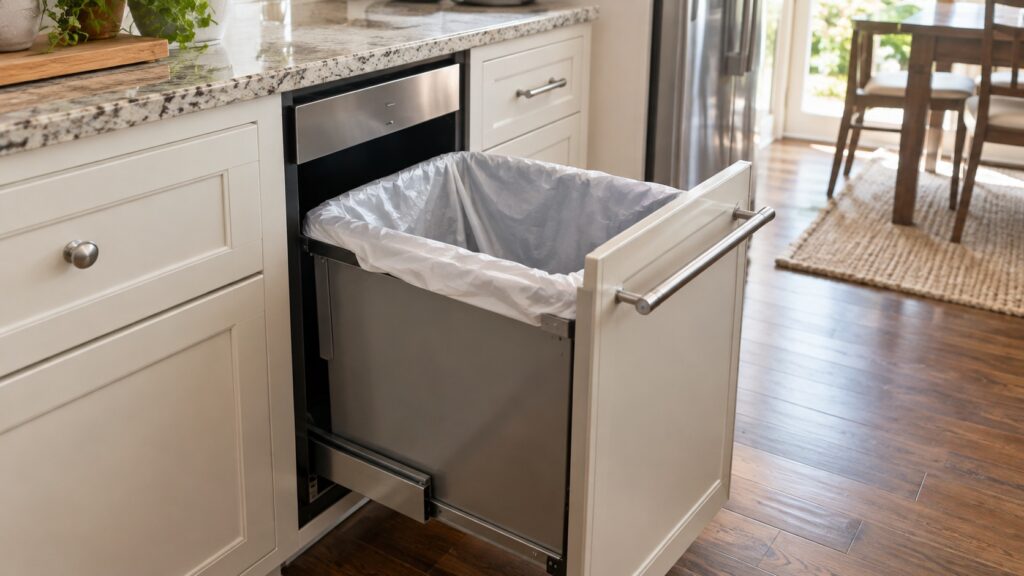
A trash compactor is the appliance in the kitchen that gets used daily and serviced never. Frigidaire trash compactor maintenance is not complicated — it is a quarterly wipe, an annual look at the ram and the drive, and a habit about what goes in — but skipping it produces exactly the two complaints we hear most: it smells, and it has stopped compacting properly.
Why smell is a maintenance problem, not a bag problem
People fight odor by changing bags more often and adding deodorizers, and it works for a week. The reason it comes back is that liquid has already escaped the bag — through a puncture, over the top, or simply because a bag was overfilled — and it is now on the cabinet floor, in the seams of the drawer and on the underside of the ram plate.
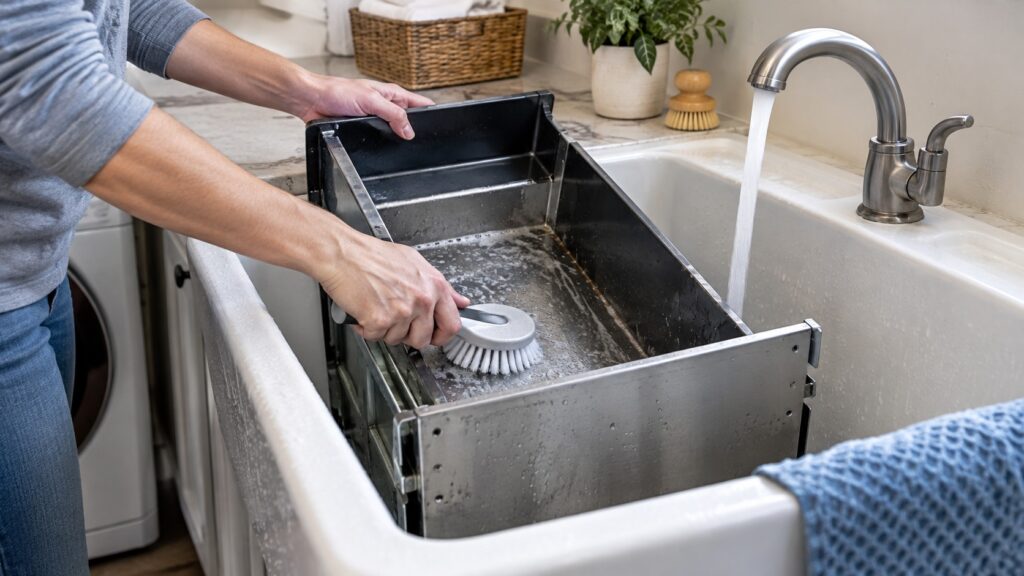
That residue is what smells, and no amount of new bags reaches it. The fix is a proper clean: drawer out, warm water with dish liquid, a soft brush into the seams, and a wipe of every surface the drawer slides against. A diluted vinegar rinse afterwards helps, and baking soda left overnight in a dry, cleaned cabinet absorbs what remains. Our odor guide goes through this in detail.
Quarterly routine
- Cut the power at the breaker or the plug. The ram is driven by a motor with real force behind it.
- Remove the drawer — most lift off the rails at the end of their travel, sometimes after releasing a catch.
- Wash the drawer inside and out, paying attention to the seams and the bag retainer clips where liquid collects.
- Wipe the ram plate, top and bottom, and the cabinet floor beneath where the drawer sits.
- Check the rails for debris and grit. A drawer that has started to bind is usually a dirty rail.
- Dry everything before reassembly, and let the cabinet air for an hour.
What not to put in it
A compactor is for dry household waste. Wet organic waste — food scraps, in particular — is the fastest route to both smell and the insect problem that follows it, and it belongs in the regular trash or the compost.
Some items are a safety matter rather than a convenience one. Aerosol cans can rupture under compaction. Paint and solvent containers spread their contents where you cannot reach them. Batteries can be punctured, and a damaged lithium cell is a fire risk. Large quantities of glass shatter into fragments that end up in the seams and cut whoever cleans it next.
The practical rule: if you would not want it crushed against your hand, it does not go in the compactor.
Bags and the mistake people make with them
Use bags made for the appliance. They are heavier than kitchen bags for a reason, and the retainer arrangement in the drawer is designed around their dimensions. A regular trash bag pressed by a compactor ram tears at the corners, and once it tears the contents are against the drawer walls.
Do not fill above the line. Compaction needs somewhere for material to go, and an overfilled bag forces waste up around the ram rather than down. That is where the top-edge leaks come from, and it is also what causes a ram to jam. Our stuck ram guide covers what to do when it happens.
How much compaction is normal
People judge a compactor by how small the bag is at the end, and that number depends far more on what went in than on the appliance. Cardboard, cans and plastic bottles compress dramatically. Paper and packaging compress well. Anything already dense — a bag of soil, a broken plate — does not compress at all, and neither does a load with a single rigid object in the middle propping the ram.
So a drop in apparent performance is worth investigating before it is worth reporting. Has the household’s waste changed? Is one bulky rigid item going in every time? Is the bag being overfilled, so the ram meets resistance early? Those explain most cases, and they cost nothing to test.
The annual look inside
With power off and the drawer out, look at how the ram is driven. Most designs use either a pair of drive screws or a chain and sprocket arrangement. What you are looking for is obvious wear, a chain that has gone slack, debris wrapped around a screw, or lubricant that has dried to a varnish and is attracting grit.
Clean debris away and check the ram travels its full stroke by hand where the design allows. If the manufacturer specifies lubrication, use what they specify and only where they specify it — household oil on a drive screw collects dust and makes the problem worse.
Look at the switches too, particularly the drawer safety switch that prevents operation with the drawer open. Grime on a switch actuator is a common cause of a compactor that suddenly refuses to start, and it cleans off. Our will not start guide covers the rest of that diagnosis.
Signs that it is time to call rather than clean
A motor that hums without moving the ram, a ram that stalls partway and reverses, grinding from the drive, a burning smell during a cycle, or a compactor that runs but no longer compresses meaningfully — those are drive, motor or control matters. So is a drawer safety switch that no longer stops the cycle when the drawer opens, and that one should be taken out of service until it is fixed.
When to call
Call for a drive or motor fault, a ram that will not return, a safety switch that no longer works, or an odor that survives a thorough clean — the last usually means liquid has reached somewhere the drawer does not come out of.
We are an independent repair company and not a factory service arm. Pricing starts from a diagnostic visit and we confirm the estimate before any work begins. Frigidaire trash compactor repair covers drives, motors, switches and controls, and you can schedule a visit online.