A Frigidaire wine cooler that has stopped holding temperature is usually worth repairing rather than replacing, because the parts that fail most often — a thermostat, a fan, a compressor relay — are inexpensive relative to a new unit, and a full bottle of wine sitting at the wrong temperature for weeks is a bigger loss than most of those repairs cost. The exception is a sealed-system failure on an older unit, where the cost of chasing a refrigerant leak starts to approach what a comparable replacement costs outright.
What actually fails on a Frigidaire wine cooler?
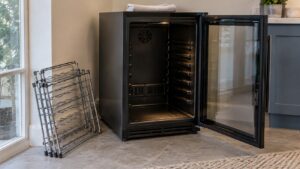
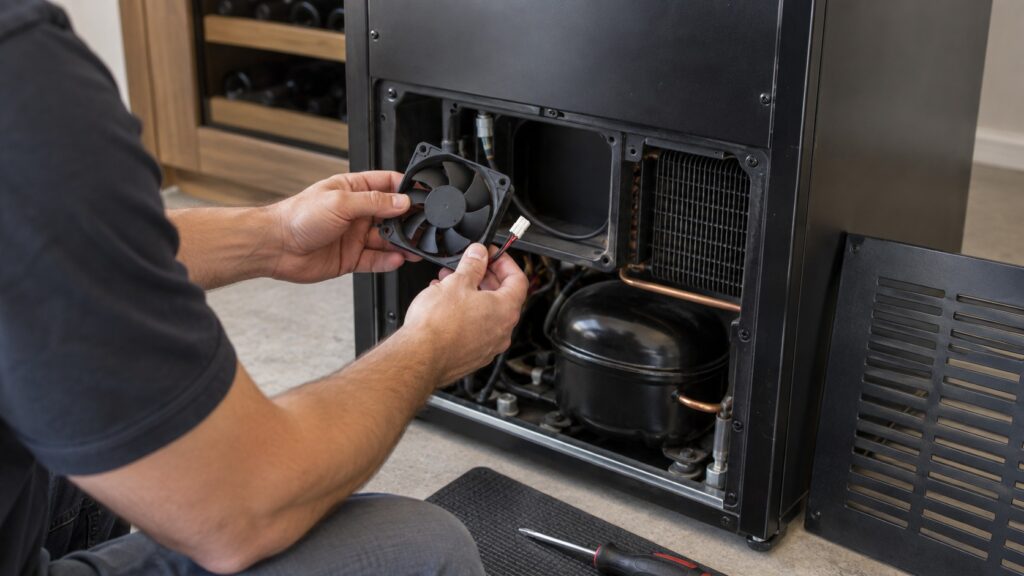
The parts that give out most often are the thermostat or temperature sensor, the circulation fan that evens out temperature across the cabinet, the door seal that keeps humidity and cold air inside, and — on dual-zone units — the divider fan or damper that keeps the two zones from mixing. All four are small, individually inexpensive parts, and none of them require touching the sealed refrigeration system to replace.
A worn door seal in particular is easy to overlook, since it causes a slow, gradual loss of cooling rather than a sudden failure. Warm air seeping in around a soft or cracked gasket forces the compressor to run longer than it should to hold temperature, which can look like a bigger problem than it actually is once the seal itself is replaced.
How does that compare to what a new wine cooler costs?
Most single-part repairs on a wine cooler run well under the cost of a comparable new unit, even a modest one, which is why the math almost always favors repair for anything short of the sealed system. A dual-zone or built-in wine cooler in particular carries a meaningfully higher replacement cost than a freestanding single-zone unit, which widens the gap even further in favor of fixing what is actually broken.
This is one of the more one-sided repair-versus-replace decisions on the whole appliance lineup, precisely because the common failures are so far removed from the expensive part of the machine. A homeowner comparing a fan or thermostat repair against buying a new dual-zone unit is usually comparing a small bill against a large one for a problem that has nothing to do with the sealed system at all.
When does a compressor failure change the math?
A failed compressor is the one common failure that gets expensive to fix, since it involves the sealed refrigeration system rather than an accessory part. On a unit under five or six years old, replacing the compressor is usually still worth doing — the rest of the cabinet, insulation and cooling design still have years ahead of them. On an older unit already showing other wear, a compressor failure is a reasonable point to compare that repair cost against a new unit rather than assume repair automatically wins.
What does a refrigerant leak change?
A refrigerant leak means the sealed system itself has a hole somewhere, and finding it, repairing it, evacuating the system and recharging it is labor-intensive work that adds up quickly. On an older wine cooler, that cost frequently lands close to what a new unit costs, at which point replacement is the more sensible choice unless the cabinet has some other reason to keep it — a built-in size that matches cabinetry, for instance.
Is a temperature difference between shelves always a problem?
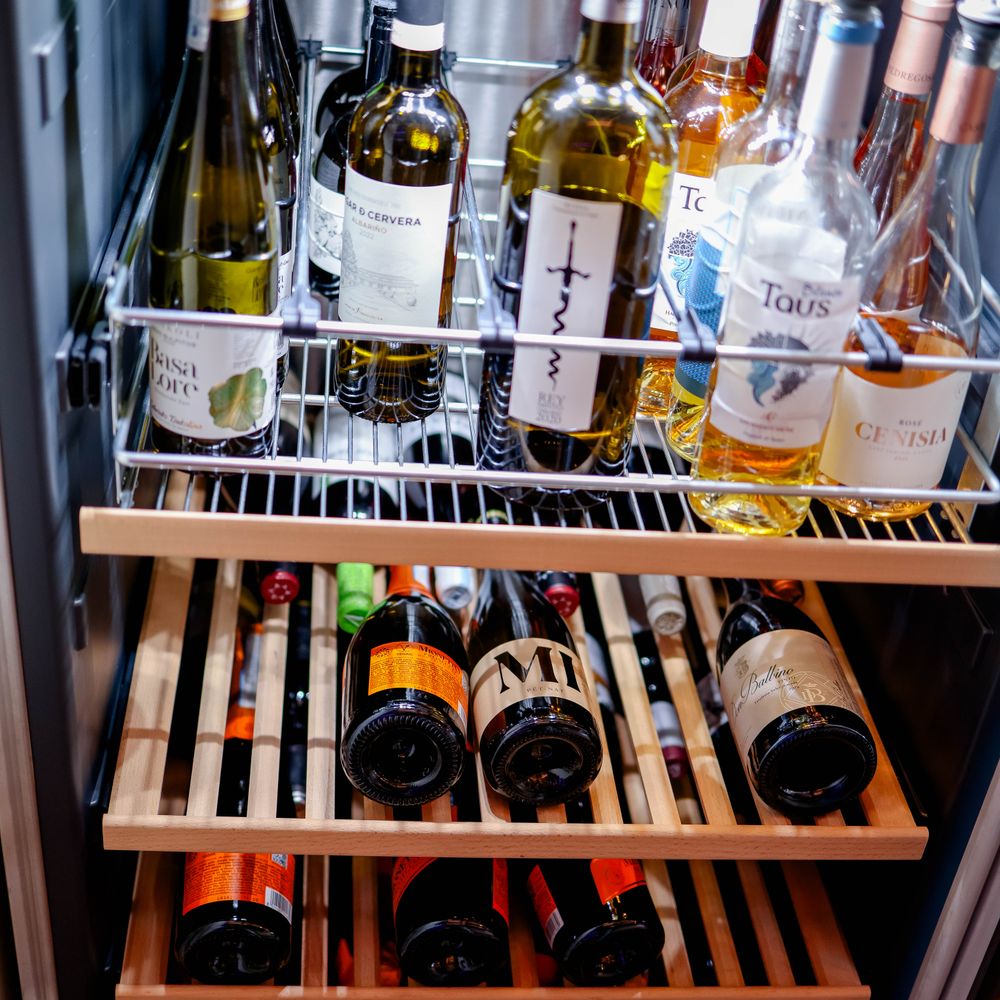
No. Some difference between the top and bottom of a tall wine cooler cabinet is normal — warm air rises even inside a refrigerated space, and most units are designed with that in mind when they place the thermostat sensor. A one- or two-degree spread is not evidence of a failing part. A wider swing, or bottles noticeably warm at every shelf, points at an actual fault rather than normal cabinet behavior.
A dual-zone unit complicates this further, since the two zones are designed to run at different temperatures on purpose. A reading that looks uneven within a single zone is worth investigating; the same spread measured between the red-wine zone and the white-wine zone is simply the unit doing what it was built to do.
Does age alone justify replacing a wine cooler?
Not by itself. A wine cooler with no history of repairs that develops one clear, fixable fault is still a reasonable repair candidate regardless of how many years it has run. Age matters more as a tiebreaker once a second or third component has failed within a short span — at that point the unit is telling you it is wearing out broadly, not that one part happened to fail.
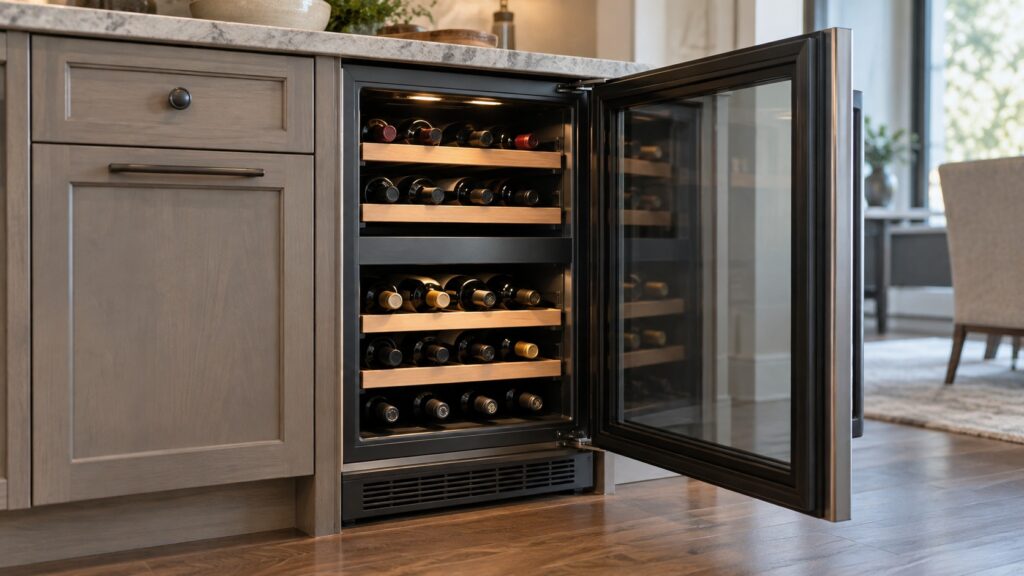
Built-in wine coolers add one more wrinkle to the Frigidaire wine cooler repair or replace decision: a unit installed flush into cabinetry has a size and venting requirement that a replacement needs to match exactly, while a freestanding unit can simply be swapped for whatever fits the space. That constraint tips the scale further toward repair for a built-in model, since finding an exact replacement size is its own project on top of the appliance cost.
Does a single power outage change the repair-or-replace math?
Not by itself. A wine cooler that loses power briefly and comes back running normally afterward has not necessarily suffered any damage — most units resume their previous setting on their own once power returns. The concern is what happened to the wine while the unit was off, not the appliance itself: a few hours without power rarely raises cabinet temperature enough to matter, while a multi-day outage is more of a wine-storage question than a repair question. Treat a power interruption as a reason to double-check the current temperature reading once power resumes, not as evidence that a part failed. It is also worth checking the paperwork before assuming any repair is fully out of pocket: many Frigidaire wine coolers carry a sealed-system warranty that runs longer than the coverage on accessory parts like the fan or control board, so a compressor or refrigerant issue on a unit still inside that window can change the repair-or-replace math entirely.
When is it worth calling instead of guessing at parts?
Call once cooling has clearly dropped off or the unit has stopped holding temperature at all, so the actual failed part can be identified before you decide between repair and replacement. Our technicians work on both single- and dual-zone Frigidaire wine coolers and will tell you plainly when a repair is not worth doing. We are an independent service, and pricing starts from a diagnostic visit with the estimate confirmed before any work begins.
If the cooler is not holding temperature, start with why a Frigidaire wine cooler stops cooling and common temperature problems. For day-to-day care that extends the unit’s life either way, see wine cooler storage tips. Frigidaire wine cooler repair covers all of the parts above, and you can schedule a visit any time.