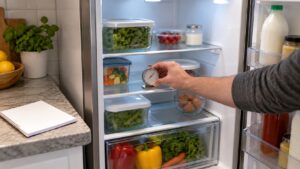
CrispSeal is Frigidaire’s name for the humidity-controlled produce drawers built into many of its refrigerators — sealed compartments with a slider that adjusts how much moisture stays trapped inside, separate from the general cabinet air. Most of the produce that goes soft too fast or molds too early is not a sign the refrigerator is malfunctioning; it is a sign the humidity slider was left in the wrong position for what is sitting in the drawer.
What does the humidity slider on a CrispSeal drawer actually do?
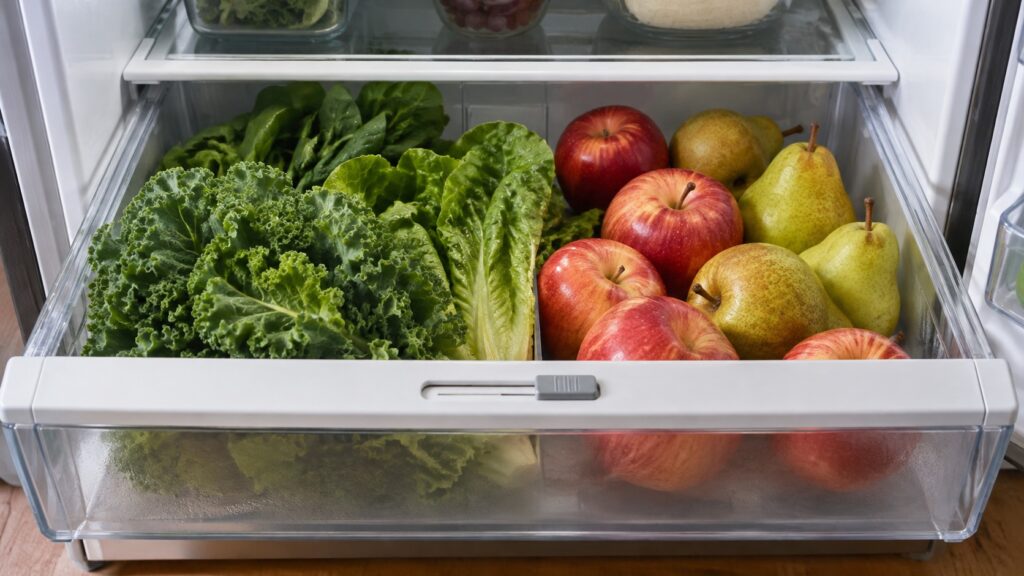
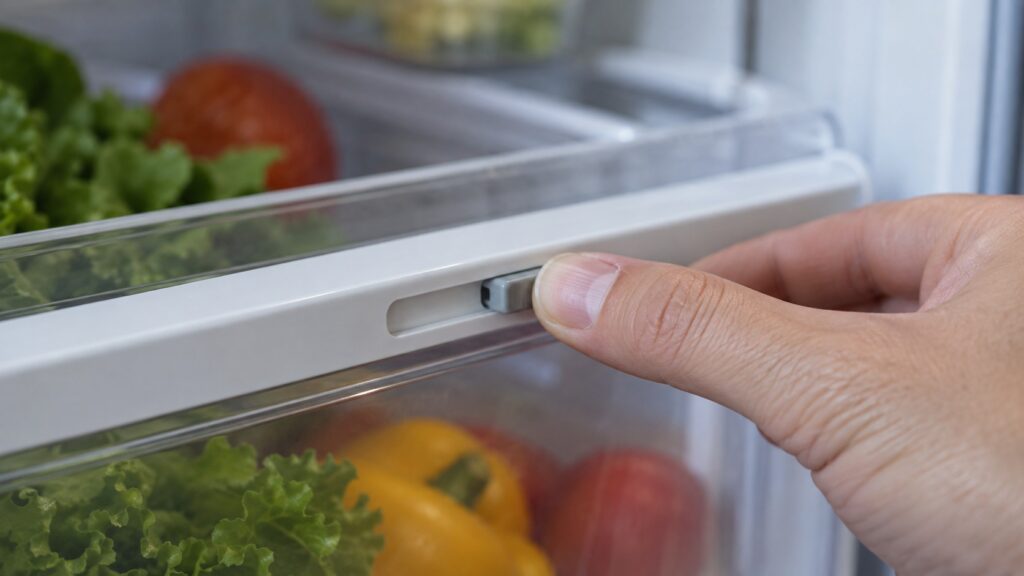
The slider adjusts a vent between the drawer and the rest of the refrigerator cabinet. Closed, it traps the moisture that produce naturally releases inside the sealed drawer, keeping the air around leafy vegetables humid so they do not dry out and wilt. Open, it lets that moisture vent out into the general cabinet air, keeping the drawer drier — which is what fruit that gives off ethylene gas actually wants, since a drier, more ventilated space slows the ripening that ethylene speeds up.
It is a small, deliberately simple mechanism, and that simplicity is part of the design: there is no electronics or sensor involved, just a manual vent that either traps moisture or releases it. That also means it never needs calibration or resetting — if produce is going bad unexpectedly, the slider position is the first thing to check, not a part to suspect of failing.
Why does mixing fruit and vegetables in one drawer cause problems?
Ethylene-producing fruit — apples, pears, avocados, ripening bananas — releases a gas that accelerates ripening in whatever sits near it. Sealed inside a high-humidity CrispSeal drawer with leafy greens, that gas has nowhere to go, and the greens wilt or yellow faster than they would in open air. This is the single most common reason produce seems to spoil faster in a “good” refrigerator than people expect — the seal is working exactly as designed, just for the wrong mix of produce.
Should both drawers always be set the same way?
No, and that is the point of having a slider on each drawer independently. A two-drawer setup works best with one drawer on high humidity for greens and vegetables and the other on low humidity for fruit, kept apart from each other rather than combined in whichever drawer happens to be less full that week.
It helps to think of the two drawers as two different jobs rather than two halves of one produce bin. Once a household settles into which drawer holds fruit and which holds vegetables, leaving the sliders where they are and simply loading consistently does more for produce life than adjusting the setting every time the drawer is opened.
Does washing produce before storing it help or hurt?
Washing most produce right before storing it, rather than right after buying it, keeps excess surface moisture out of the drawer. Produce stored wet inside a sealed high-humidity drawer can mold faster than the same produce stored dry, since the drawer is already adding moisture on its own. Dry the produce, then let the CrispSeal setting do the humidity work.
Berries are the clearest example of this in practice. Rinsed and left damp in a sealed high-humidity drawer, they often mold within a couple of days; dried thoroughly first, the same berries in the same drawer commonly last most of a week. The drawer setting did not change — only the moisture on the fruit going in did.
Can overfilling a CrispSeal drawer cause problems on its own?
Yes. Packing a Frigidaire CrispSeal produce drawer tightly blocks the airflow the humidity vent depends on to actually circulate, and it also means produce sits in direct contact for longer, which speeds spoilage regardless of the humidity setting. Leaving a little room in the drawer lets the vent do its job across everything inside it, not just the top layer.
A drawer stacked to the lid also traps whatever gas or moisture a single spoiling item releases against everything around it, which is how one soft tomato or one moldy strawberry can take down an otherwise healthy drawer of produce within a day or two. Checking a full drawer every couple of days for the first item starting to go is a cheap habit against a much larger loss.
What is not a CrispSeal problem, even if produce is spoiling?
If food is going bad throughout the whole refrigerator — not just in the produce drawers — the humidity system is not the cause. That points at the refrigerator’s overall cooling, which is a different question entirely from how a sealed drawer manages moisture. A quick way to tell the two apart: check whether milk or other items on the shelves above the drawer are also warmer than expected. If they are, the problem is cooling, not humidity, and no amount of adjusting the CrispSeal slider will change the outcome.
Does produce need to be trimmed or bagged before it goes into the drawer?
Trimming visibly damaged or bruised leaves and stems before storage helps more than most people expect, since a single bruised spot on produce releases moisture and speeds decay in whatever sits against it inside a sealed high-humidity drawer. Loosely bagging leafy greens, rather than piling them directly in the drawer, adds a second layer of moisture control on top of the CrispSeal setting itself and makes it easier to spot the first leaf starting to turn before it affects the rest of the bag.
Root vegetables and firmer produce generally do fine loose, without bagging, since they hold moisture internally rather than losing it quickly to the air the way leafy greens do. Reserving bags for the produce that actually wilts, rather than bagging everything uniformly, keeps the drawer easier to check at a glance.
Where the drawer sits inside the cabinet matters too, separately from the humidity slider itself. A CrispSeal drawer positioned close to the main cold-air vent can expose whatever sits nearest that airflow to frost damage, which shows up as blackened or translucent patches on delicate leaves that have nothing to do with the humidity setting at all. If one side of a drawer consistently frosts while the other stays fine, rearranging what sits nearest the vent solves it faster than adjusting the slider ever will.
When should you call for service?
Call if a CrispSeal drawer’s slider is stuck, if the drawer will not seal against the front of the cabinet, or if produce keeps spoiling fast even after separating fruit from vegetables and adjusting the humidity setting correctly. Our technicians can tell a mechanical drawer or seal problem apart from ordinary humidity-setting mistakes. We are an independent service, and pricing starts from a diagnostic visit with the estimate confirmed first.
If cooling seems off rather than humidity, start with why a Frigidaire refrigerator stops cooling. For the storage system elsewhere in the cabinet, see what SpaceWise means and how EvenTemp cooling works. Frigidaire refrigerator repair covers drawer and seal issues, and you can schedule a visit any time.