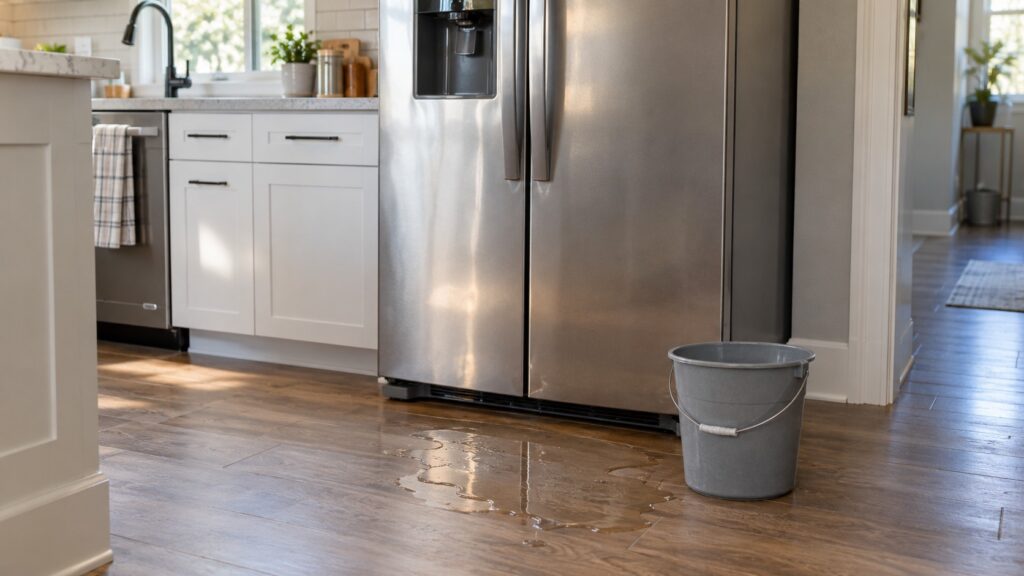
A Frigidaire side by side leaking from freezer is most often meltwater that cannot reach its drain: the defrost drain at the back of the freezer is frozen or clogged, so each defrost cycle sends water to the floor of the freezer instead of to the pan under the refrigerator. The other usual causes are a door seal that lets humid air in, a refrigerator that is not level, and a dispenser or water-supply problem. Where the water collects, inside the freezer or on the kitchen floor, tells you which one to check first.
Why is my Frigidaire side by side leaking from the freezer?
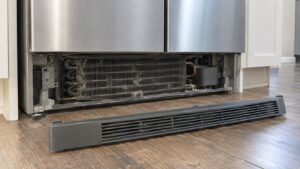
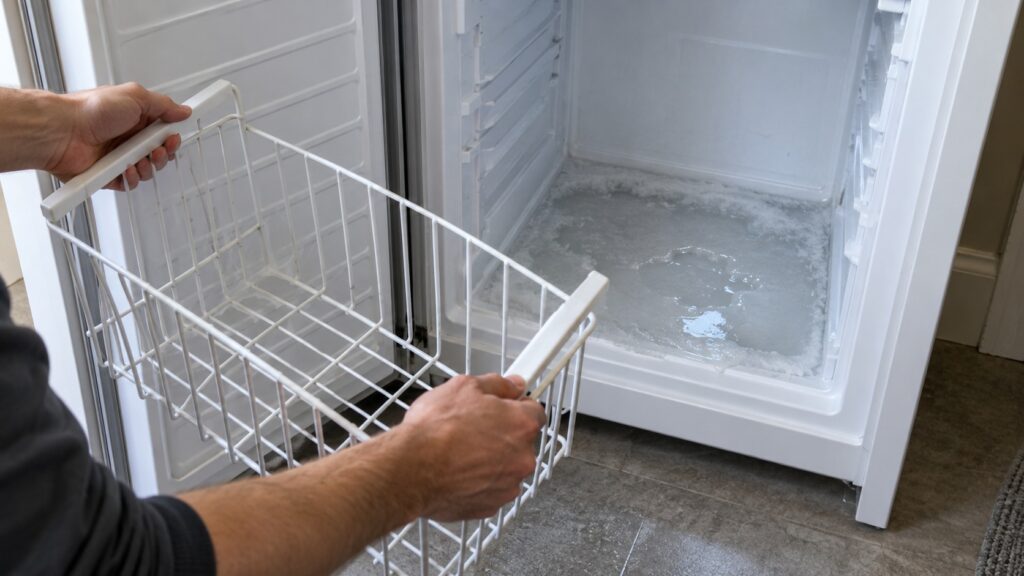
A frost-free freezer melts the frost off its evaporator on a schedule. The heater warms the coil, the frost turns to water, and the water runs into a drain at the bottom of the evaporator area, through a tube, and into a pan where it evaporates. You normally never notice any of this. When the drain freezes shut or fills with debris, the meltwater has nowhere to go. It pools in the bottom of the freezer, refreezes into a sheet of ice, and over weeks it spills onto the floor. Our page on freezer water leaking describes the same pattern, and our guide on how a Frigidaire freezer defrosts explains the cycle in more detail.
Frigidaire side-by-side models such as the FFSS2615TS, the FRSS2623AS and the Gallery GRSS2652AF all have a frost-free freezer and an external ice and water dispenser. Our model pages list water pooling from a clogged defrost drain among the common reasons for a refrigerator call, which is why this is the first thing to suspect.
How do you tell where the water is coming from?
Dry the area first, then watch it for a day. Take the food out of the lower freezer baskets if you need to see the floor of the cabinet. Water and ice on the inside floor of the freezer point to the defrost drain. A leak that shows up shortly after a defrost cycle points the same way. If the freezer is dry inside but the floor in front of the refrigerator is wet, the water is escaping from somewhere else: an overflowing pan, a tilted cabinet or the supply line to the ice and water dispenser. Look at the seal at the same time. Frost or dampness around the door gasket means humid room air is getting in and condensing.
If the water has reached the plug or the cord, switch off the breaker for the refrigerator at the panel while standing on a dry floor. Never pull a plug from a wet outlet.
Can you clear a frozen defrost drain yourself?
You can clear the ice, but not the machinery. Our page on freezer water leaking tells you to fully defrost the unit and then check whether the defrost drain channel is iced over or clogged. That page is written for freezers, and on a side by side the freezer shares one cabinet with the refrigerator, so the whole refrigerator is affected and the exact defrost steps differ by model; your owner’s manual has them. The safe outline is to move the food to coolers, switch the refrigerator off at the breaker, leave the freezer door open and catch the meltwater with towels. Do not chip the ice with a knife or use a heat gun, because the coil and the refrigerant lines sit just behind the panel and a puncture cannot be repaired. Wipe the cabinet dry before you restart it. Our Frigidaire freezer frost buildup guide explains why frost returns.
Do not remove rear panels to reach the drain; that is a technician’s job. If the leak returns within a few weeks of a clean defrost, the drain is freezing up because the defrost system is not doing its job, and clearing the ice has only reset the clock.
Could the door seal or the level of the refrigerator be the cause?
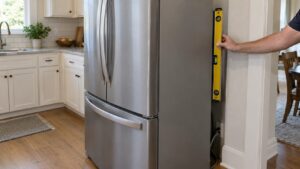
Yes, and both are quick to check. A torn, dirty or flattened gasket lets humid air into the freezer, where it condenses, freezes and later melts into water that looks like a leak. Wipe the gasket with warm soapy water, look for gaps or tears, and make sure nothing, such as a basket or a bag, holds the door open a crack. A refrigerator that is not level can also send water toward the door instead of toward the drain. Adjust the front feet until the cabinet is level and the doors swing shut on their own.
What about the ice maker, the dispenser and the water filter?
If the puddle is in front of the refrigerator and the freezer floor is dry, look at the water side. A water filter that is not seated, or a supply fitting behind the refrigerator that has loosened, can drip steadily. Our Frigidaire refrigerator water filter guide shows how the PureSource filters are removed and seated. A filter that does not restore the flow points to a frozen fill or dispenser line, a kinked supply, or a failed inlet valve. Those are technician jobs. Our guide on a Frigidaire ice maker leaking covers portable countertop ice makers, not the one built into a refrigerator, so it is not the right page for this problem. If you cannot find the source, switch off the water at the shutoff valve and book a visit.
When should you call a technician?
Call if the leak comes back after a full defrost, if the ice returns to the freezer floor within weeks, if the refrigerator is also warm (see why a Frigidaire refrigerator is not cooling), or if the water is coming from the supply side. A technician clears the defrost drain, tests the heater and thermostat, and checks the pan and the water connections. Read what Frigidaire refrigerator repair covers or book a visit.