
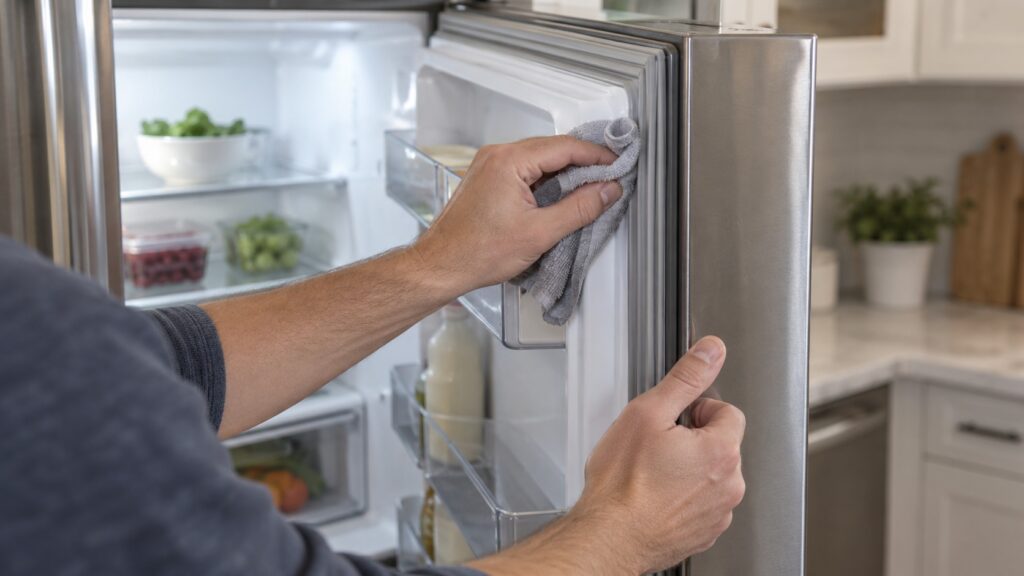
A Frigidaire refrigerator door gasket needs three things from you: a wipe every month or two, a paper test twice a year, and a replacement when it stops gripping. The gasket is the soft, flexible strip around the edge of each door, and it is the only thing between cold air inside and warm, humid air outside. When it is clean and supple it seals with a gentle magnetic pull. When it is dirty, creased or torn, the refrigerator runs longer, frost builds on the freezer walls, and the door edge sweats. This guide shows how to care for the gasket, how to test it, and how to tell a seal that needs cleaning from one that needs replacing.
Why does the door gasket matter so much on a Frigidaire refrigerator?
Every time cold air leaks out of a gap, warm air flows in to replace it, bringing moisture. The moisture freezes on the coldest surface it finds, which is why a bad gasket often shows up first as frost on the freezer wall or ice around the door opening. The compressor then runs longer to remove the extra heat, which raises your electric use and wears the cooling system. On a side-by-side or French-door model the freezer side usually shows trouble first, since it is colder and any leak is more visible there.
That is why a gasket problem is so often mistaken for something larger. A refrigerator that cannot hold temperature may have a failing fan or sensor, or it may simply be losing cold through a damaged edge. Rule out the gasket first, because it costs nothing to test. Our Frigidaire refrigerator not cooling guide sets out the rest of the checks once the seal passes.
How do you clean a refrigerator door gasket properly?
Clean it the way you would clean a rubber glove you intend to keep using. Wipe the whole gasket with a cloth wrung out in warm water and a little mild dish soap, and pay attention to the folds, where spilled juice and grime collect and then glue the seal to the cabinet. Use a soft toothbrush in the corners. Rinse with a clean damp cloth and dry with a towel, because a damp gasket attracts mold.
Avoid bleach, abrasive pads, solvents and oil-based cleaners. They dry out or swell the vinyl, which makes it crack or lose its shape. If a door gasket drags or sticks when you open it, wash it before you do anything else; some owner’s manuals allow a very thin film of petroleum jelly on the hinge side, so check yours before using it. A clean seal that still sticks is a sign the vinyl is aging.
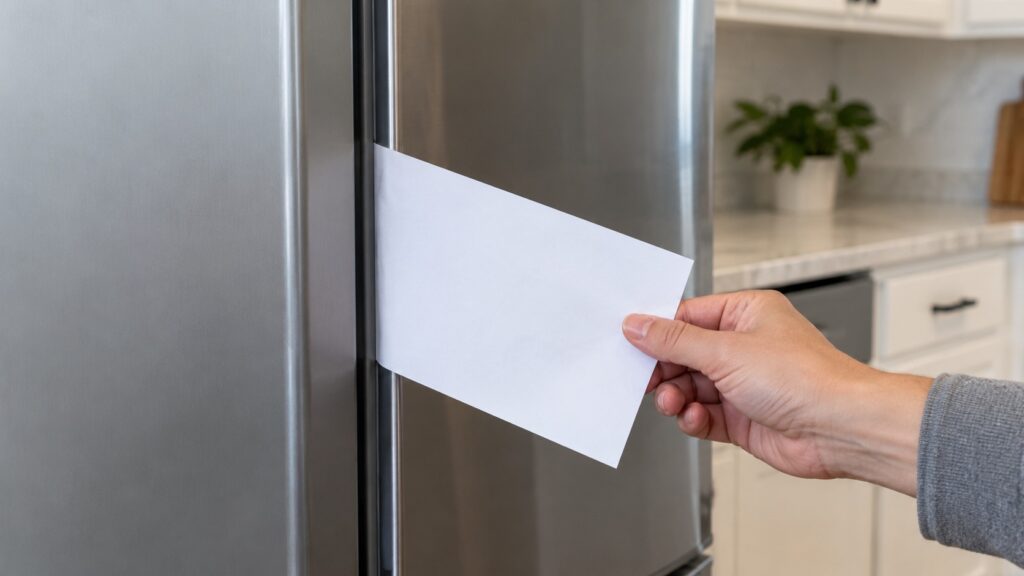
How do you test a gasket with a sheet of paper?
Take a sheet of paper or a dollar bill, open the door, lay the sheet across the gasket and close the door on it. Try to pull the sheet out. A good seal grips it with steady resistance. If it slides out freely, the seal is weak at that spot. Repeat the test at least six points on each door: top, bottom, hinge side and latch side, plus the corners, since gaskets fail at corners first.
Use a second test in a dark kitchen. Put a flashlight inside the refrigerator, shut the door and look around the edge for light. Any glow shows a gap. Mark the spots with a bit of tape, then see whether they match the places where paper slid out easily.
If the failures sit in one corner or along one side, look for a cause beside the gasket. A door bin overloaded with bottles, a shelf sticking out, or a drawer slightly open can hold the door ajar. On French-door models such as the FRFG1723AV and PRMC2285AF, which list auto-close doors, check that nothing stops the door from swinging fully shut.
Could the refrigerator being unlevel be the real problem?
Yes, and it is the cause people overlook. A refrigerator should stand level side to side and tilt a little toward the back, so the doors swing closed under their own weight. If it leans forward, doors sag open a fraction and the gasket never meets the cabinet evenly. Adjust the front feet or leveling rollers until a level shows a slight backward lean, then recheck the paper test. A refrigerator that is level, loaded sensibly and clear of obstructions often passes the test with the old gasket.
Can a dented or folded gasket be reshaped?
Often, if the vinyl is still soft. Warm the dented section gently with a hair dryer on a low setting held a few inches away, keeping it moving, and press the fold back into shape with your fingers. Close the door and leave it shut for a few hours. Never use a heat gun or hold the dryer in one place, because heat damages the vinyl and the plastic liner behind it. If the shape springs back or the vinyl feels hard and brittle, reshaping will not last, and it is time to replace the gasket.
When does a gasket need to be replaced, and who should do it?
Replace a gasket that is torn, split at a corner, permanently flattened, hardened with age, or moldy through the vinyl rather than only on its surface. Gaskets are made for a specific model and door, so give the model and serial number from the label inside the fresh-food section when you order. Some seal strips press into a channel and others sit behind a retainer held with screws, and a new gasket should be soaked in warm water so it relaxes into shape and then fitted from the corners outward. Take care around the door foam and the liner, which are easy to damage with a pry tool.
Because a poor fit can look like a good one for a week, many owners prefer a technician. Replacement is routine for us, and a visit also lets the technician check the fans, the defrost drain and the sensors in the same visit. If you suspect a failing seal on a freezer, our guide to frost buildup in a Frigidaire freezer explains the damage a leak can cause. The symptom page for a freezer door that is not sealing covers what you see in more detail, and our freezer maintenance tips add the routine for a standalone unit, including the lid gasket on a chest freezer.
To arrange a visit, use Frigidaire refrigerator repair or book a visit directly. We are an independent service, so we will tell you plainly when a cleaning and a leveling are all the refrigerator needs.