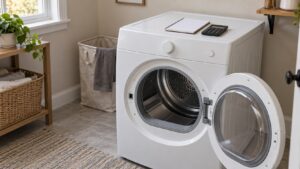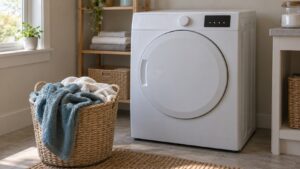
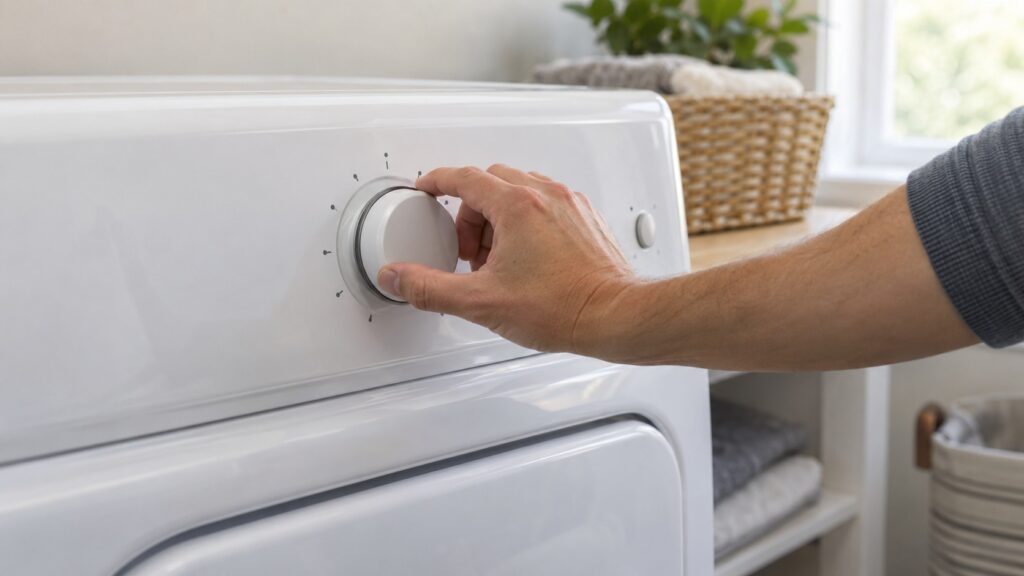
Good Frigidaire dryer cycle selection starts with the fabric label and the size of the load. Use a sensor or automatic cycle for most everyday loads, so that the dryer stops when the clothes are dry. Use a timed cycle for a small load, a single heavy item or a touch-up. Use a lower-heat option for delicates and anything the label says to protect from heat. The exact names and the number of cycles differ by model, so your owner’s manual is the list for your dryer.
How do you choose a cycle on a Frigidaire dryer?
Look at the care label first, because it sets the limit for heat. Then look at the load: its size, its weight and how wet it is. A full load of towels is a different job from a few shirts. Most owners do well with one sensor-type cycle for ordinary loads and a lower-heat cycle for anything delicate. Our site lists, for example, the FLVE7523BW as an electric dryer with eleven cycles and sensor drying and the FFRE4120SW as an electric dryer with ten cycles and a moisture sensor. The names of those cycles and the way each behaves are in the manual for the model.
What is the difference between a sensor cycle and a timed cycle?
Our dryer how it works guide says that older and budget dryers run on a timer, heating for the minutes you set, and that most current models use a moisture sensor that reads how damp the clothes are. A sensor cycle keeps drying until the load is actually dry and then stops, which protects fabric and saves energy compared with over-drying on a timer. That is why an automatic cycle can run a different length every time, and why that is normal. A timed cycle is useful when you want control, for example for a small load or a quick finish on a nearly dry item.
Which fabrics need a gentler cycle?
The care label decides, and when it says low heat or hang dry, believe it. Delicates, items with elastic or trim and many synthetics can shrink, warp or wear out faster under strong heat. Use the lowest heat option or an air cycle for them, and take them out promptly. Do not mix heavy towels with thin shirts, because the towels hold water far longer, so the shirts end up over-dried while the towels are still damp. Separate loads by fabric weight and you will use fewer cycles.
How much should you put in the dryer?
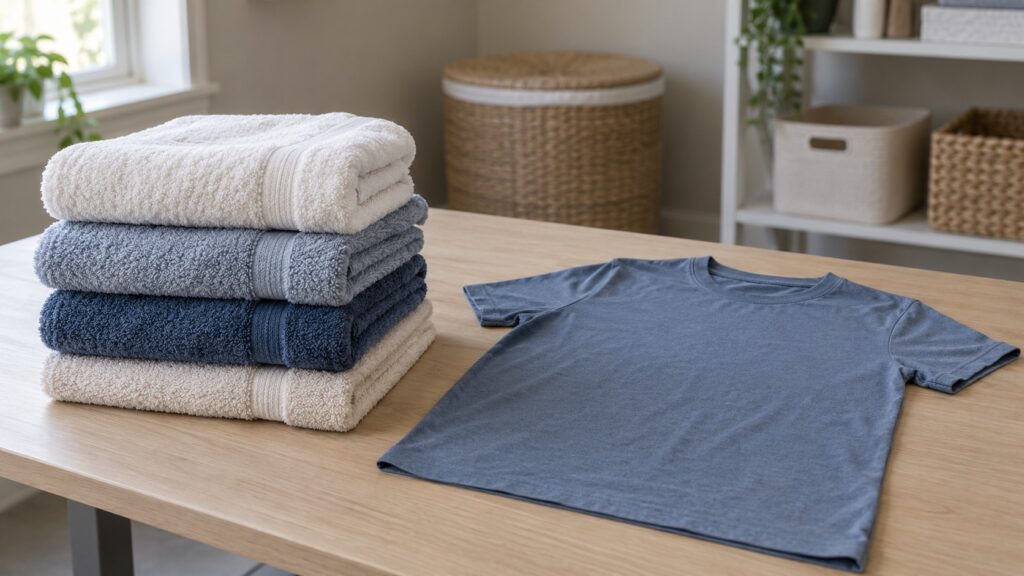
Clothes need room to tumble in warm air. An overloaded drum stays damp in the middle, takes much longer and wears the clothes. A very small load can confuse a moisture sensor, because few items touch the sensor bars, and a timed cycle may suit it better. Shake out wet items as you load them so that they do not go in as one knot, and take the load out when the cycle ends, since wrinkles set when clothes sit in a warm drum. Many models include an anti-wrinkle or wrinkle-release option, which the manual describes.
What do names such as Quick Dry or Wrinkle Release mean?
Our model pages list feature names such as Sensor Dry, Quick Dry, Timed Dry and Wrinkle Release for the FLVE7523BW, and Moisture Sensor, Quick Dry, Anti-Wrinkle and Timed Dry for the FFRE4120SW. The pages list the names but do not describe how each one runs, so what each does on your exact model, including how long it runs and how hot it gets, is in your owner’s manual. As a general guide, a quick cycle is for a small load that you need soon, and a wrinkle option is for a load that has to wait for you. Treat both as conveniences, and keep your everyday habit simple: sensor cycle, clean screen, sensible load.
What should you do before every load?
Clean the lint screen every time, because a blocked screen restricts airflow, makes cycles run long and can cause the dryer to overheat. Our dryer vent cleaning guide covers the duct behind the dryer, which is the other half of the airflow path. A dryer that suddenly takes much longer on the same cycle is usually telling you about the vent, not about the cycle, and our dryer taking too long guide goes through the causes. Do not dry items that have been soaked in oil, gasoline or other flammable substances, because they can ignite.
When is the problem the dryer, not the cycle?
If clothes are damp or cold at the end on every cycle, the cause is a blocked vent or a failed part. Our model pages say that a no-heat dryer shows E5B or E64 on some models, that E24 and E25 point to the thermistor and that E8C points to the vent or high-limit. Our dryer glossary explains the codes, and our dryer not heating guide covers the checks. Do not open the cabinet to look. A burning smell or sparks means stop the dryer and switch off the breaker at the panel while standing on a dry floor.