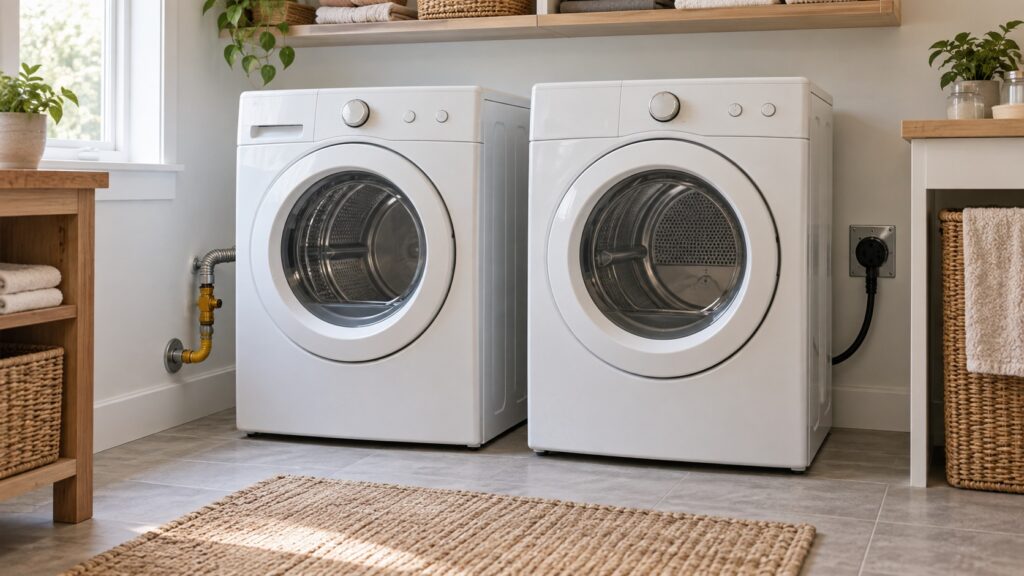
The choice between a gas and an electric Frigidaire dryer usually comes down to what is already run to the laundry space, not which one dries clothes better — both heat a drum to similar temperatures and finish a load in a similar amount of time. What actually differs is installation cost if the right hookup is not already there, operating cost over years of use, and a couple of maintenance items that only apply to one type.
What is the real difference in how each one heats?
An electric dryer heats air with a resistive element — the same principle as a toaster, just larger and lower-temperature. A gas dryer heats air by burning natural gas or propane at a burner assembly, with an electric igniter and a 120-volt circuit to run the drum motor, controls and igniter itself. A gas dryer is never fully electricity-free; it still needs a standard household outlet alongside the gas line.
Which one costs less to buy?
Electric models are typically less expensive up front, with gas models running higher across most of Frigidaire’s comparable lineup. That gap is worth weighing against the installation cost below, since the purchase price is only part of the total cost of switching from one fuel type to the other.
Which one costs less to run over time?
In most parts of the country, natural gas costs less per unit of heat than electricity, which makes a gas dryer cheaper to run load after load once it is installed. That gap varies by local utility rates and by how much laundry a household actually does — a household running one load a week will take years to recover any price difference between the two through operating savings alone.
What does it cost to switch from one fuel type to the other?
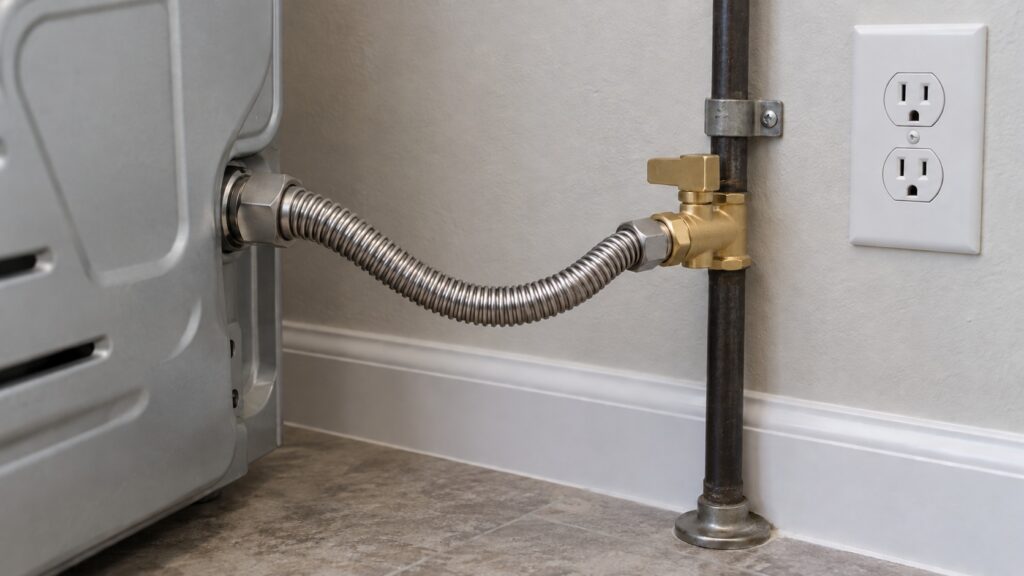
This is where the decision usually gets made in practice. A home with an existing gas line to the laundry area can install a gas dryer with no new infrastructure. A home without one faces running a new gas line, which is a real plumbing project, not a swap. The reverse is also true: switching from gas to electric in a home with no 240-volt outlet nearby means running a new dedicated circuit. Whichever hookup is already present in the wall is almost always the deciding factor, well before efficiency or price enters into it.
Does venting requirements differ between the two?
Both gas and electric dryers need to vent to the outside — venting a dryer of either type indoors is a fire and moisture hazard regardless of fuel source. A gas dryer’s exhaust carries combustion byproducts in addition to moist air, which makes a clear, unrestricted vent run even more important for a gas unit than for an electric one, not less.
A blocked or restricted vent also affects each fuel type differently once airflow drops. An electric dryer with a clogged vent mainly runs longer and wears its element harder. A gas dryer with the same restriction is trapping combustion exhaust as well as moisture, which is the more urgent version of the same underlying problem and a stronger reason to check the vent run before assuming either dryer needs a repair.
Are there maintenance differences once it is installed?
A gas dryer has an igniter and a gas valve that an electric dryer simply does not have, and those are the parts most likely to need attention over the unit’s life that an electric owner never deals with. An electric dryer’s heating element is the equivalent wear part on that side. Vent cleaning and lint filter care matter equally for both types.
An igniter that glows but fails to light the burner is one of the more common gas-specific service calls, and it produces a symptom that looks identical to a bad heating element on an electric model: a dryer that tumbles without heating. The fuel type does not change what you notice from the laundry room, only which part is behind it.
How do you decide without guessing?
Start from what is already run to the space: an existing gas line points toward gas, an existing 240V outlet points toward electric, and neither infrastructure being present means the decision is really about which one is cheaper to add, not which dryer performs better. From there, weigh the higher gas purchase price against lower running costs if you expect years of regular use. For most households replacing a dryer that already exists in the same spot, the Frigidaire gas vs electric dryer decision has effectively already been made by the hookup already in the wall, and the real choice is just which specific model to buy within that fuel type.
Does capacity or drum size differ between the two fuel types?
Within Frigidaire’s lineup, comparable gas and electric dryers generally share the same drum sizes and capacity ratings model for model — fuel type does not by itself make a dryer larger or smaller inside. Any capacity difference you find while shopping is almost always a difference between two model tiers, not between the gas and electric version of the same tier. That makes capacity a separate decision from fuel type entirely: pick the drum size the household needs first, then check whether that specific model is available in the hookup already in the wall. Timing is the other practical factor worth planning around: a straight swap into an existing hookup can usually happen the same day a new dryer arrives, while running a new gas line or a new 240-volt circuit adds a separate electrician or plumber visit before the dryer itself ever gets installed — worth factoring into the schedule if the current dryer has already failed and the household is without one in the meantime.
When is it worth calling instead of shopping?
Call if you are unsure whether an existing gas line or electrical circuit is adequate for a new dryer, or if an existing dryer of either type is having igniter, element or heating problems that a replacement might not actually be needed to fix. Our technicians service both gas and electric Frigidaire dryers and can help separate a repairable fault from a genuine reason to replace. We are an independent service, and pricing starts from a diagnostic visit with the estimate confirmed first.
If an existing dryer is not heating, see why a Frigidaire dryer stops heating and what its heat-related error codes mean. For upkeep either type needs, see dryer vent cleaning. Frigidaire dryer repair covers both fuel types, and you can schedule a visit any time.