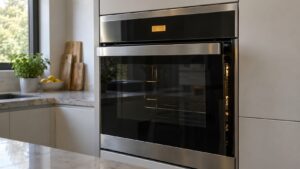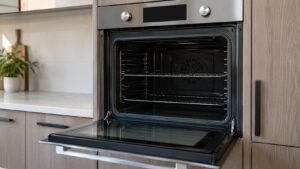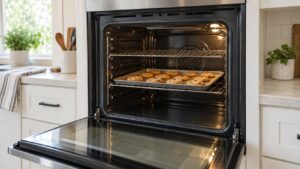
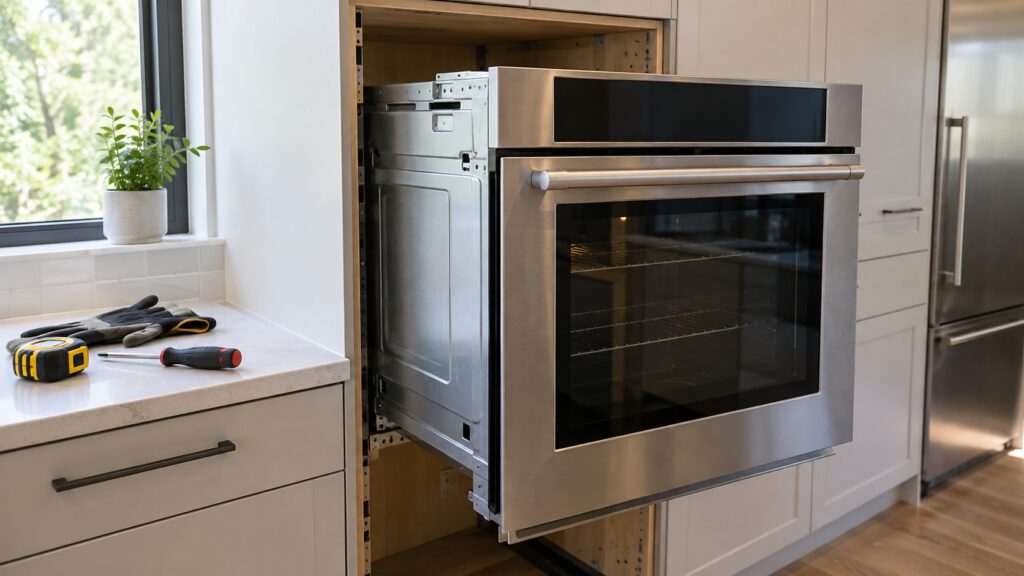
A Frigidaire wall oven goes into a built-in cabinet cutout, not a floor slot, which changes almost every part of the installation compared to a range: the cutout has to be built to an exact height and depth before the oven ever arrives, the electrical or gas connection runs into the wall cavity rather than along the floor, and a single or double oven changes the cutout height by roughly a cabinet’s worth of space. Getting the cutout wrong is the single most common reason a wall oven installation stalls partway through.
What has to be true about the cabinet cutout before delivery?
A Frigidaire wall oven installation starts with the cutout, not the appliance. The height, width and depth all have to match the specific model’s installation instructions, not a generic wall-oven size — Frigidaire’s single and double wall ovens vary by a few inches from model to model, and cabinetry built to the wrong figure will not close flush no matter how carefully the oven is set in. The cutout also needs solid support along the base and sides, since a wall oven is heavier than it looks once the door and racks are loaded, and it hangs its full weight on the cabinet frame rather than standing on the floor.
How does a double oven change the installation compared to a single?
A double wall oven needs roughly twice the vertical cutout of a single, and that extra height usually means removing a full cabinet or reworking the surrounding cabinetry rather than simply choosing a bigger box. It is worth deciding between single and double before any cabinetry is built, not after — converting an existing single-oven cutout to double after the fact is a cabinetry project, not a swap.
Weight is the other difference worth planning for. A double wall oven carries two full cavities, two sets of racks and two control systems in one cabinet opening, and that combined weight needs a cabinet frame built to support it long-term, not just at the moment of installation. Cabinetry rated for a single oven is not automatically rated for a double, even when the width happens to match.
What does the electrical connection need?
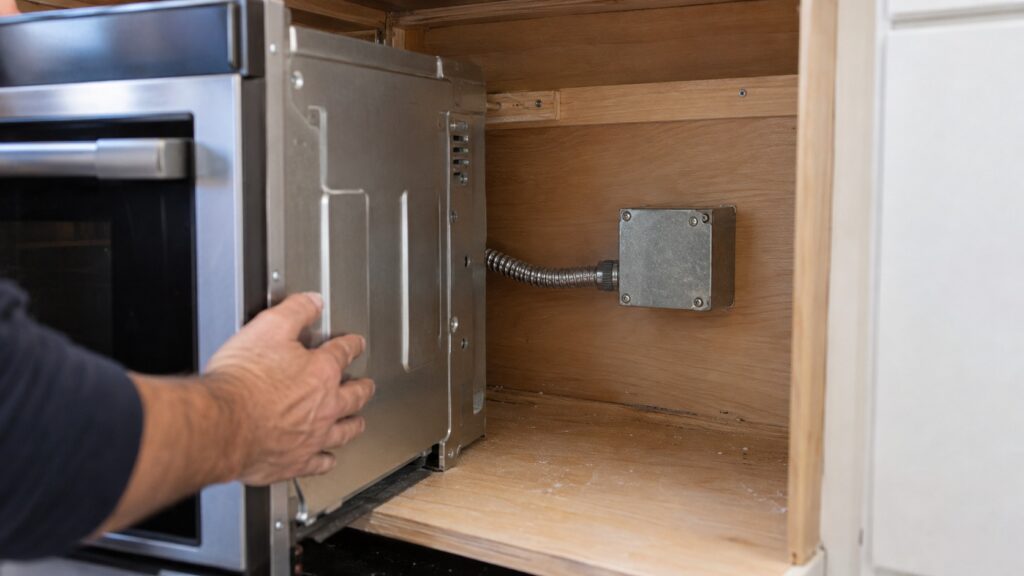
Most Frigidaire wall ovens run on a dedicated 240-volt circuit sized to the nameplate rating, and the majority are hardwired into a junction box behind the unit rather than plugged into an outlet. That junction box needs to be positioned so it is reachable once the oven is most of the way into its cutout, since the connection happens before the oven is pushed fully home. Running a new circuit or moving an existing junction box is electrical work, not a step to improvise during the install.
What does a gas wall oven need instead?
A gas wall oven needs its own gas line terminating in a shutoff valve positioned so it stays accessible after the oven is installed — not buried behind it. The connection also needs a flexible connector rated for the application and a leak check after hookup, before the oven is used for the first time.
What ventilation does a wall oven need?
A built-in wall oven vents through the front, at the top or bottom of the unit depending on the model, into the room rather than through ductwork. The cabinetry around it needs enough clearance at that vent point to avoid trapping heat against the cabinet face, and the space above or below an oven in a stacked configuration (oven over microwave, for example) needs to match Frigidaire’s minimum clearance figures for that pairing.
A cabinet built without that clearance traps heat against the surrounding wood and trim over years of use, which can warp cabinetry or discolor a finish well before anything about the oven itself needs attention. Checking the vent clearance figure against the actual cabinet drawing, not just against a similar oven’s cutout, is worth doing before the surrounding cabinetry is finished, not after.
What is the first thing to check after the oven is in place?
Confirm the door closes flush against the cabinet face on all sides, run a short bake cycle to check the oven heats and shuts off normally, and verify the control panel display reads correctly before considering the install finished. A door that sits slightly proud of the cabinet almost always means the cutout depth was off, not that the oven itself is defective.
It is also worth checking that the oven sits level inside the cutout, front to back and side to side, before securing it permanently. A wall oven that is even slightly out of level can affect how evenly a bake performs, since the oven’s temperature sensor and airflow design assume a level cavity. A short check with a level, before the mounting screws go in, is far easier than diagnosing an uneven bake months later.
Does the cutout need anything special for a stacked microwave-oven combination?
A stacked microwave-oven or speed-oven-over-wall-oven combination adds a support ledge requirement that a single standalone cutout does not have. The upper appliance’s weight needs to bear on the cabinetry itself, not on the lower oven, so the cabinet has to include a rated shelf or ledge at the exact height the combination unit specifies — not simply enough clearance to fit both boxes into one tall opening. Skipping that ledge and letting the top unit rest on the wall oven below puts sustained weight on a door and control panel that were never designed to carry it.
Combination cutouts also concentrate two separate ventilation paths and two separate electrical or gas connections into one section of cabinetry, so it is worth confirming both appliances’ spec sheets against the same cabinet drawing before either one is ordered, rather than assuming a wall oven cutout and a microwave cutout simply stack on top of each other without changes.
When is it worth calling instead of doing this yourself?
A mismatched cutout is also common on a replacement job rather than a first install: an older wall oven being swapped for a newer Frigidaire model can leave a gap around the new unit’s frame if the replacement is narrower than what was there before, and that gap needs a trim kit rated for the combination rather than a bead of caulk or a stopgap filler strip. Call before starting if the existing cutout was built for a different model, if a double oven is going into a single-oven space, or if either the electrical circuit or gas line needs to be run new. Getting the rough-in wrong is expensive to redo once cabinetry is finished. Our technicians handle both electric and gas wall oven installations and can confirm a cutout against a specific model’s spec sheet before any cabinetry work happens. We are an independent service, and pricing starts from a diagnostic or install visit with the estimate confirmed first.
Related reading: choosing between a single and double Frigidaire wall oven, calibrating oven temperature once it is running, and range installation requirements if you are comparing a wall oven to a freestanding range instead. Frigidaire oven repair covers post-installation issues, and you can schedule a visit any time.