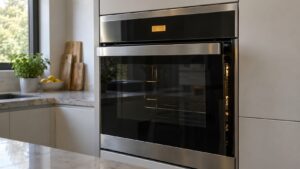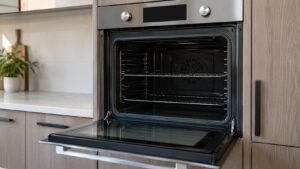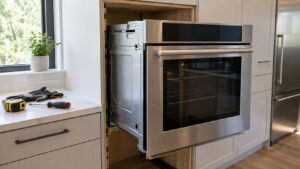
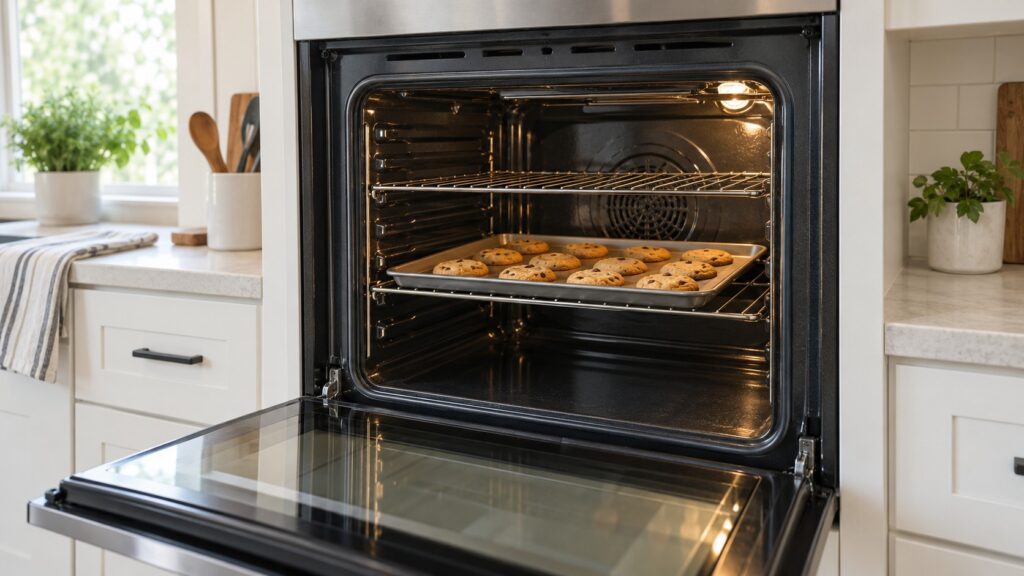
The right Frigidaire oven rack position is the center of the oven for most baking, a lower position for tall roasts and pizza, a higher one for broiling, and the position named in your manual for air frying. Rack height decides how close food sits to the heat source, and that is the quickest way to fix an oven that browns the top before the middle is done. This guide gives the working rules for Frigidaire ranges and wall ovens, including Gallery and Professional models with True Convection, Total Convection and a built-in air fry mode, and it shows how to place one rack or several.
Which rack position should I use for everyday baking?
Use the center of the oven. In a conventional bake the heat comes from the lower element, with the upper element cycling to hold temperature, so the middle of the cavity is where top and bottom heat balance. A sheet of cookies, a cake pan or a tray of muffins on the center rack browns evenly, and it gives you room above and below for the air to circulate. When a recipe says only “middle rack”, it means this.
Shift the rack only for a reason. Move it lower when the tops of baked goods are browning before the centers set, and higher when the bottoms are pale and soft. Change one position at a time and write down what happened, since the right placement depends on your pans as much as your oven. Dark metal pans absorb more heat and brown faster than light ones, so a pan swap can matter as much as a rack move.
Where do racks go for roasting, pizza and broiling?
A tall item needs headroom. A whole chicken or a large roast sits best on a lower-middle rack so the top does not sit near the upper element and scorch while the inside is still cooking. Check the height before you preheat: slide the pan in with the rack in place and leave at least a couple of inches clear above it.
Pizza and flatbread want strong bottom heat, so use the lower third of the oven. A preheated pizza stone or a heavy steel baking sheet on that rack gives a crisp base. Keep pans off the oven floor, and do not line the floor with foil, since foil can trap heat and damage the finish and the bottom element. A sheet of foil on a lower rack, edges folded up, catches drips instead.
For broiling, the rack sits in an upper position. The nearer the food is to the element, the faster it browns, so thin cuts and toast take a high rack and thick steaks or chicken pieces take a lower one. Models with Vari-Broil, such as the FFGW2426US, let you pick the level of heat as well. Follow your manual about leaving the door ajar or closed while broiling, because it differs between gas and electric ranges.
How should I place racks for convection and air fry?
Convection means a fan moves the oven air, which only works if air can travel. Use a low-sided pan or a baking sheet and leave a couple of inches between the pan and the oven walls. When you bake on two racks, separate them as far as the cavity allows and stagger the pans, so one does not block the fan’s airflow to the other. Swap the pans front to back and top to bottom halfway through if one side browns faster. Our guide to Frigidaire True Convection explains what the fan and the third element do.
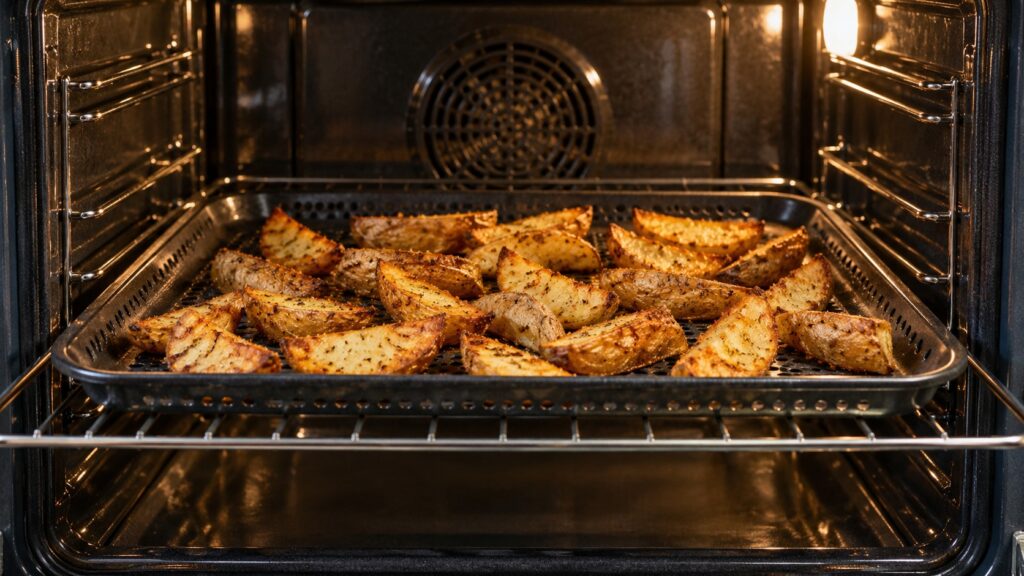
Air fry is a convection mode that relies on the airflow most of all. On Gallery models such as the GCWS3067AF wall oven and GCRG3060AF range, and on Professional models that include the ReadyCook Air Fry Tray, the tray is the key accessory. Its perforated surface lets hot air reach the underside of the food, so use it rather than a solid pan, and place it at the position given in your manual’s air fry chart. Do not crowd the tray; a single layer crisps and a pile steams. Our guide to how Frigidaire air fry works gives the background.
Some Professional models also have a No Preheat mode. That mode is built to start cooking without waiting for the oven to reach temperature, so for those models the rack position matters even more, and the manual’s chart should be followed closely.
What goes wrong with racks, and what does it look like?
- Top browns, middle raw. The rack is too high, or the pan is dark. Lower the rack one position or tent the top with foil.
- Bottom burns. The rack is too low, or a pan sits directly on the floor. Raise it and use a lighter pan.
- One side cooks faster. The rack is not level, the pan is warped, or two pans block airflow. Check the rack seating at both rails.
- Everything bakes unevenly in every position. That points to the oven rather than the rack. Check the temperature with a separate oven thermometer, and read our oven temperature calibration guide if it is off.
An oven that does not heat at all is a different problem; use our Frigidaire oven not heating guide for that.
What safety habits protect you when you move a rack?
Set the racks before you turn the oven on. If you must move one when the oven is hot, wear oven mitts that reach past the wrist, pull the rack out only partway and use a long tool or a folded dry towel in the rack’s slot. Never pull a hot rack all the way out; many tip when they clear the stops. Take racks out before a self-clean cycle, because chrome racks can discolor and stick in the extreme heat, and read our Frigidaire range self-clean guide before starting one. Keep the door gasket clear of foil and spills so the door still closes tightly.
If the oven shows an F code, stop and look the code up rather than cooking around it. When it needs attention, Frigidaire oven repair is the place to begin, and you can book a visit. We are an independent service, so we will say plainly when the fault is the rack, not the oven.