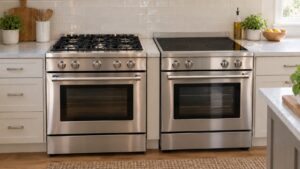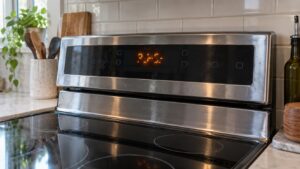
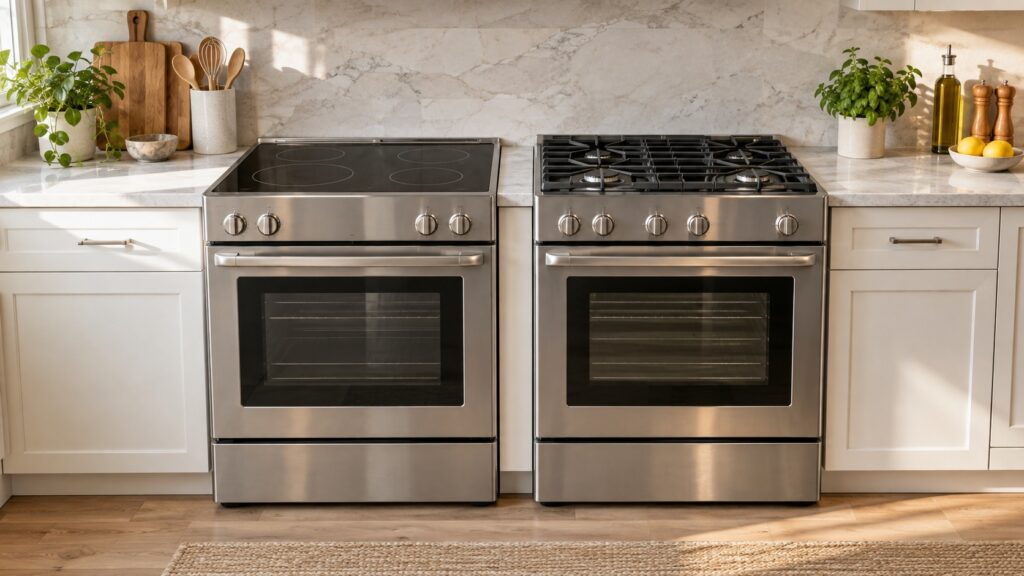
The Frigidaire FFEF3054TS and FFGF3054TS are the same 30-inch freestanding range in two fuels: the FFEF3054TS is electric with five smoothtop elements, and the FFGF3054TS is gas with five sealed burners. Both are stainless, both have a self-cleaning oven, and the choice between them comes down to the hookup already behind your range and how you like to cook on the surface. The FCRG3052AS, a gas range with a 16,000 BTU Quick Boil burner, is the close cousin worth knowing about if you are shopping gas.
What is the real difference between the FFEF3054TS and the FFGF3054TS?
Fuel and surface, mostly. The FFEF3054TS cooks on five radiant elements under a smooth glass-ceramic top, led by a Quick Boil element that heats faster than the others. It also has an expandable element, a ring pair that lets one cooking zone grow from a small pan size to a larger one. The FFGF3054TS cooks on sealed gas burners with continuous cast-iron grates, so a heavy pot slides from burner to burner without lifting. It has a high-output Quick Boil burner at 17,000 BTU and a gentle 5,000 BTU simmer burner for sauces.
The oven cavity is the other measurable difference. Our model pages list 5.3 cubic feet for the electric range and 5.0 cubic feet for the gas range, both with self-clean. For most households that gap does not decide a purchase, but if you regularly bake with a large roasting pan or two sheet pans at once, check the rack positions in person before you commit.
Which one fits the hookup behind my range?
Start here, because it decides most purchases. A range swap is simple when the new range matches what is already in the wall. An electric range needs a dedicated 240-volt circuit and the right receptacle. A gas range needs a gas line with a shutoff valve and a flexible connector, plus a standard 120-volt outlet, since the oven control and igniters are electric. Switching fuel type means a new gas line or a new circuit, which is an electrician or plumber project before the range ever arrives. Our Frigidaire range installation guide walks through the anti-tip bracket, leveling and connections.
How do they cook differently?
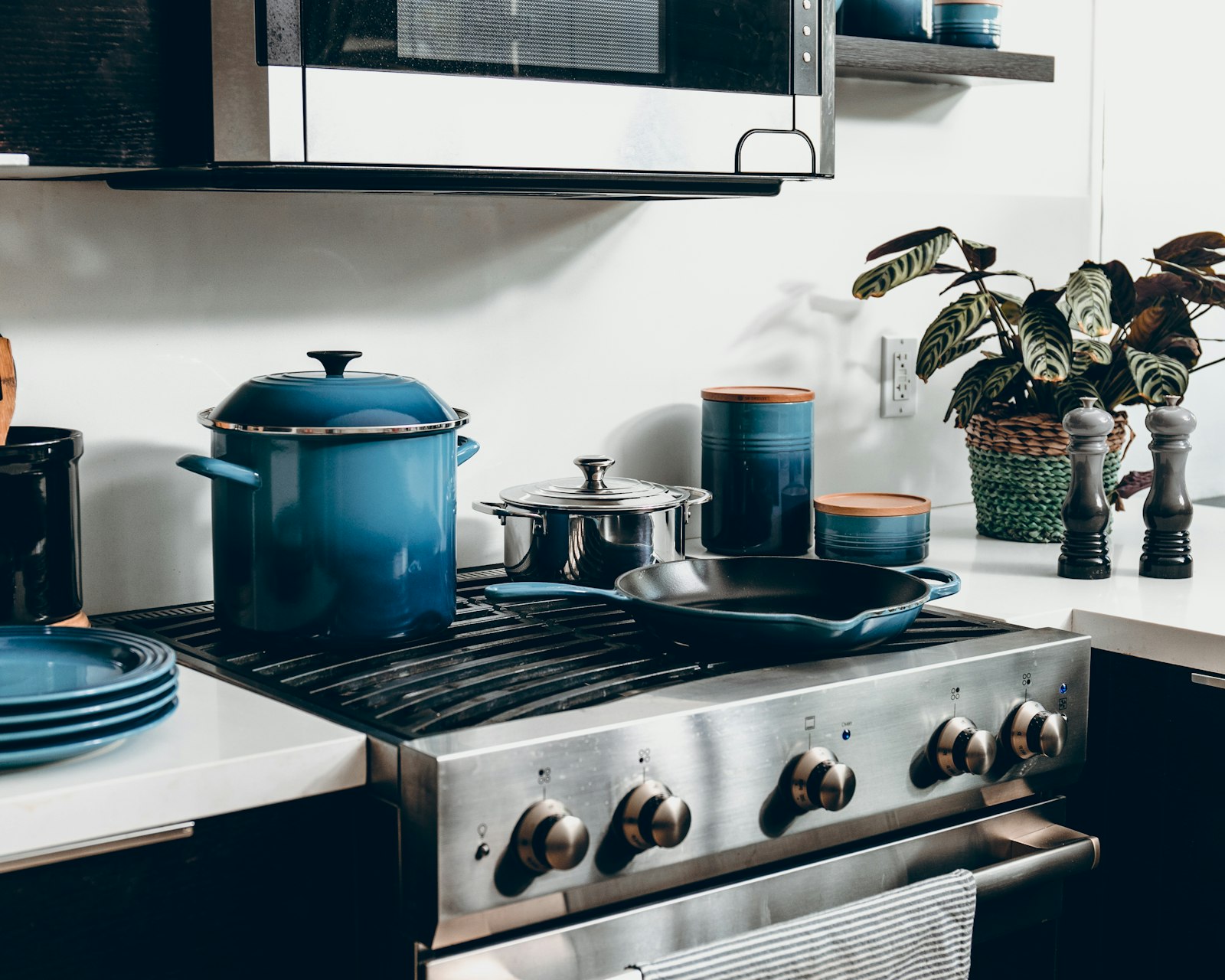
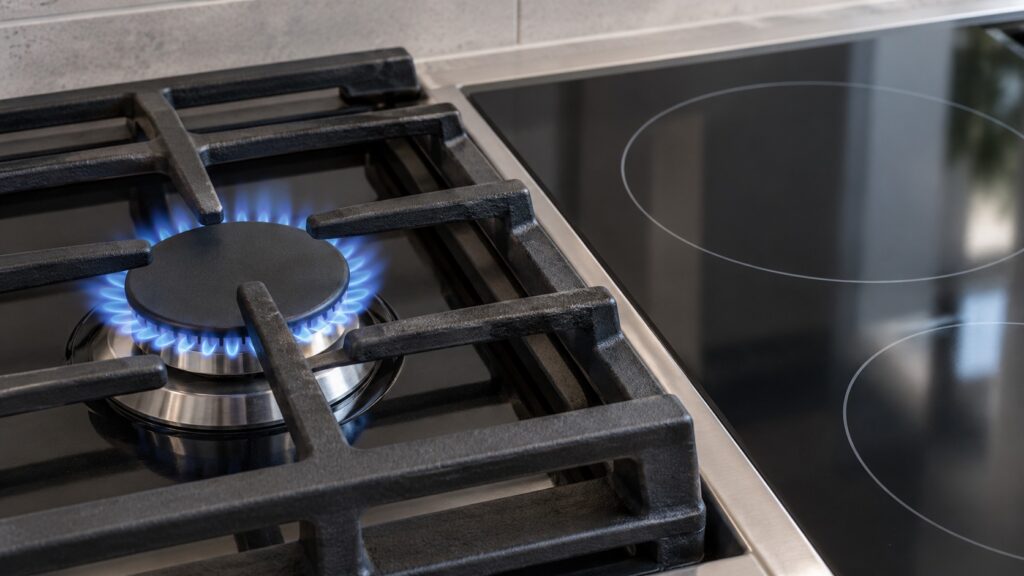
Gas gives instant visual control: you see the flame and change it immediately. A sealed-burner range also keeps spills contained in the burner well. Radiant electric cooks more evenly under a flat pan and the glass top wipes clean in a pass, but it responds more slowly when you turn it down, and the element stays hot after the control is off. Cooktop users who want the fastest boil will notice the Quick Boil element or burner on either range, which is the single feature both models advertise at the surface.
Inside the oven the two behave alike for everyday baking. Frigidaire builds both with a bake and broil system and a self-clean cycle, and gas ranges add one extra part to the story: an igniter. A bake igniter that glows but fails to open the gas valve is a well-known gas oven fault, and it shows up as an oven that will not heat, with no code on the display at all.
Which one is easier to live with over the years?
Both are straightforward appliances, and what goes wrong differs by fuel. On the electric model, surface elements wear and the oven’s temperature sensor drifts; the failures that produce codes are the electronic ones, such as the F1x control family and the F30 and F31 sensor codes described in our Frigidaire oven F30 guide. On the gas model, surface burners produce no codes. A burner that will not light is diagnosed by symptom: a wet or misseated burner cap, a clogged port, or a failed spark module, all covered in our guide to a Frigidaire range burner that will not light.
The oven, on either fuel, speaks through F codes. F10 is the one to treat seriously: it is a temperature runaway warning, and the range should be disconnected until it is looked at. The rest of the control family, F11 to F13, stop the oven rather than risk bad data, and F30 and F31 point to the oven temperature sensor.
Where does the FCRG3052AS fit?
The FCRG3052AS is the gas range to compare if the FFGF3054TS is not on the shelf where you are shopping. It also has five sealed burners, but the top burner is rated at 16,000 BTU rather than 17,000, and the model is marketed around Even Baking Technology for oven consistency. Its electric twin in our model list is the FCRE3052AS, which pairs Even Baking Technology with a 3,000-watt Quick Boil element and a Keep-Warm Zone. If you want that warming zone, the electric FCRE3052AS is the model to look at instead of the FFEF3054TS.
For service purposes the FCRG3052AS, FFGF3054TS and the electric models share the same logic: gas surface burners are diagnosed by symptom, while the oven on every one of them reports through F codes. That makes parts and diagnosis predictable whichever you buy.
How do I decide?
Work through three questions in this order. What is already behind the range, gas line or 240-volt outlet? Do you want a flame under the pan, or a flat top that wipes clean? And do you want the warming zone, the storage drawer or the larger oven? If the hookup is open to either, choose on the cooking style. If it is not, choose the fuel you already have, and put the money you would have spent on a new line toward the range itself.
If you are replacing an older Frigidaire and are unsure whether repairing it would make more sense, read the Frigidaire range repair or replace guide first. A failed keypad or sensor is often worth fixing; a cracked cooktop plus a failing control is a different conversation. When you want an opinion on a range you already own, Frigidaire range repair covers both fuels, and you can book a visit directly.