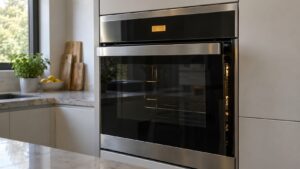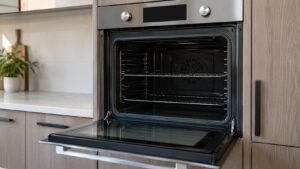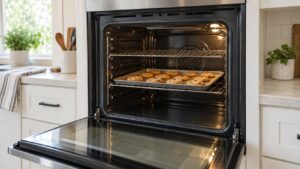
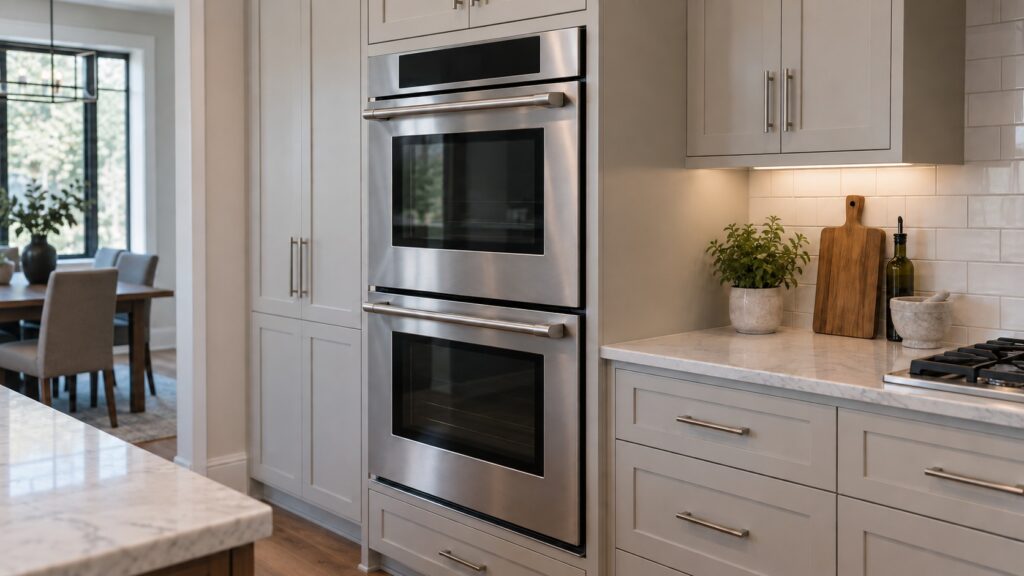
The fcwd3027as is a 30-inch double electric wall oven and the GCWS3067AF is a 30-inch Gallery single wall oven, so the choice between them is not really about features — it is about how many cavities you want to own, and how many of everything you are prepared to have repaired later. Two cavities mean two door locks, two sensors, two element sets and two fan motors in the same cabinet opening.
What is the real difference between these two wall ovens?
The FCWD3027AS gives you two independent cavities stacked in one opening: a large lower oven and a second oven above it that can run a different temperature at the same time. That is the entire argument for a double, and for a household that cooks two dishes at two temperatures on the same evening it is a good one.
The GCWS3067AF trades the second cavity for cabinet space and a simpler machine. Gallery-tier trim and controls sit on it, but the working parts are the same family: bake and broil elements, a convection fan, a temperature sensor, a door lock motor, and a control board that coordinates them.
Will a double fit where a single fits?
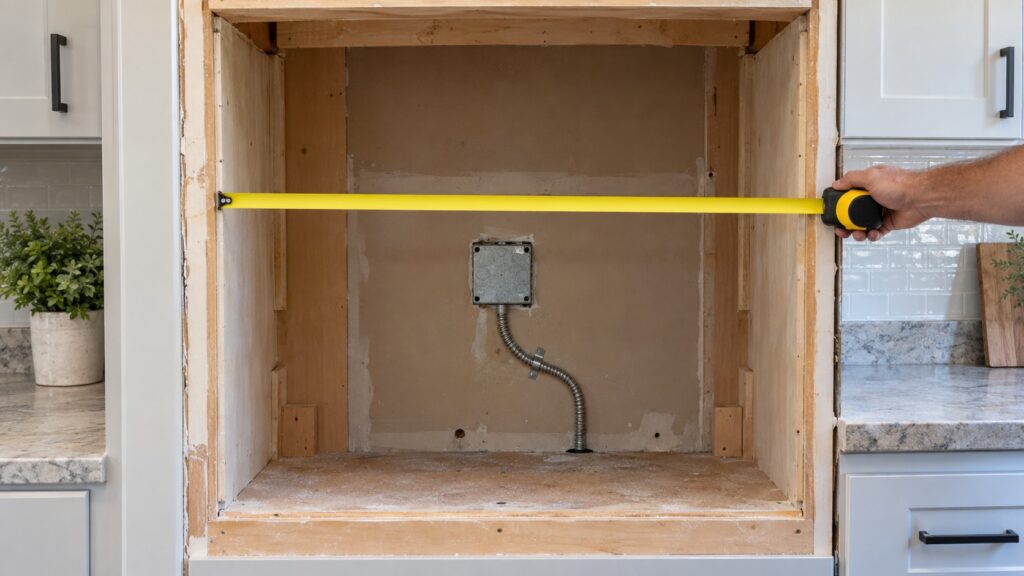
No, and this is the question that costs money when it is skipped. A 30-inch double wall oven needs close to double the cutout height of a single, plus the cabinet structure to carry considerably more weight. Swapping a single for a double means rebuilding the tall cabinet, not just sliding a new box into the hole.
Going the other way — a single into an opening built for a double — leaves a gap that needs a filler panel or a warming drawer beneath it. Measure the opening height, width and depth before anything else, confirm the electrical supply matches the rating on the nameplate, and remember that the run to the junction box has to reach the new unit’s connection point, which is not in the same place on both.
Which one is easier to live with day to day?
A double puts the upper cavity at chest height, which is genuinely better for anything you lift in and out often, and the lower cavity is then quite low. A single sits in the middle, which suits most people for most tasks. Neither arrangement is wrong; they just fail differently for different kitchens.
Capacity is the other honest trade. A single 30-inch cavity takes more in one load than either cavity of the double taken alone. If you roast large cuts or bake full sheet pans in pairs, one big cavity beats two smaller ones. If you routinely need two temperatures, nothing about a single fixes that.
What does a second cavity mean for repairs?
Every consumable part is doubled. Two bake elements, two broil elements, two convection fan motors, two temperature sensors and two self-clean door lock assemblies live in the FCWD3027AS. Over a fifteen-year life that is simply more that can need attention, and the door lock is the part that reports itself loudest — our guide to F90 and F91 door-lock codes covers what happens when one refuses to release.
There is one place where the double is simpler rather than more complex: a single control board usually runs both cavities. That means a board fault can take out both ovens at once, and it also means one part is replaced rather than two. Worth knowing before assuming that half an oven working proves the board is fine.
What should I check before buying either one?
- The opening. Height, width, depth, and whether the cabinet face is square. Old cutouts rarely are.
- The circuit. Confirm the breaker size and wire gauge against the nameplate rating, and have an electrician verify it if the kitchen has not been rewired in decades.
- The junction box position. The supply has to reach without splicing inside the cabinet.
- Door swing and traffic. An open oven door in a galley kitchen blocks the room; a double blocks it twice as often.
- How you actually cook. Count the evenings in the past month when two temperatures were needed at once. That number decides this, not the brochure.
How do you keep either oven out of the repair queue?
The habits are the same for both, and they are unglamorous. Wipe heavy spills by hand rather than saving them for a self-clean cycle, because a long clean on a dirty cavity is what seizes door locks and bakes wiring insulation. Run a short clean once or twice a year so the latch mechanism keeps moving instead of sitting in one position for years.
Racks are the small thing worth mentioning, because both of these ovens are lived in through them. Pull the racks out before a clean cycle unless the manual says they are clean-safe, since the coating that lets them slide is what a long clean burns off. A rack that binds in its guides afterward is not broken, but it will never slide the way it did.
Check the calibration when a new oven starts producing results that do not match the recipe — a new wall oven reading twenty degrees off is a setting, not a fault, and our calibration guide walks through adjusting it. If you are still weighing configurations more broadly, the wall oven buying guide covers fuel type, convection and cavity sizes across the range rather than these two units.
When is it worth calling instead of shopping?
Call before replacing when an existing wall oven will not heat, will not unlock, or reports a sensor code. Elements, sensors, fan motors and lock assemblies are serviceable parts on both of these ovens, and a working cabinet cutout with sound wiring is worth more than the appliance sitting in it. A fifteen-year-old oven with a failed element is a repair; one with a cracked cavity liner is not.
We are an independent repair company and not a factory service arm. Pricing starts from a diagnostic visit, from $89 in most areas, and we confirm the estimate before any work begins. Frigidaire oven repair covers both single and double wall ovens, and you can schedule a visit online or call (844) 440-7025.