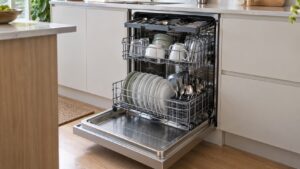
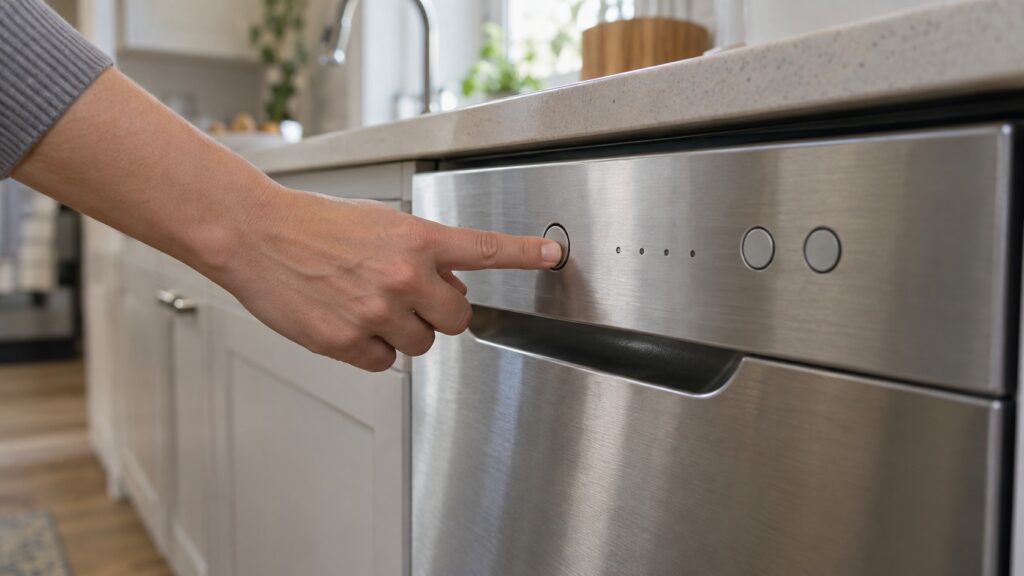
The right Frigidaire dishwasher cycles for everyday life come down to two questions: how dirty is the load, and what is it made of? A normal or auto cycle suits a typical load of plates and glasses, a heavier cycle suits baked-on cookware, and a lighter or shorter one suits lightly used or delicate items. The names and exact behavior of each cycle differ by model, so use this guide to choose, and your owner’s manual for what the buttons on your machine are called.
How do you pick the right cycle on a Frigidaire dishwasher?
Start with the dirtiest item in the load, because that item sets the job. A load of dinner plates with dried-on sauce needs a stronger program than one that holds only coffee cups. If everything is lightly soiled, the everyday program is almost always enough. If a pan has burned-on food, choose the heavier option and place the pan facing the spray. Most owners do best by using one dependable program for most loads and changing it only when the load clearly calls for it.
Your control panel and your owner’s manual give the real list of cycles for your model. We do not list cycle times or temperatures here, because they differ by model and the numbers belong to your manual.
What does a sensing cycle do?
Some Frigidaire models carry a soil-sensing feature. Our dishwasher features glossary describes DishSense as a feature that reads how dirty the wash water is and lengthens or shortens the cycle to match. That is why the same program can run longer on one evening than on another, and why a longer run is often not a stuck cycle. If your model has no sensing feature, the cycle runs the fixed pattern the manual describes. Whether yours senses is a model question, so check the model page or the manual.
Do you need to rinse dishes first?
Scrape off solid food, but you generally do not need to wash the dishes by hand first. Dishwasher detergent works by clinging to food soil, and a plate that is already spotless can leave detergent with little to act on. Heavy food scraps are another matter, because they collect in the filter. The filter is the part that protects the pump, and our dishwasher filter cleaning guide shows how to keep it clear. A clogged filter makes any cycle look weak.
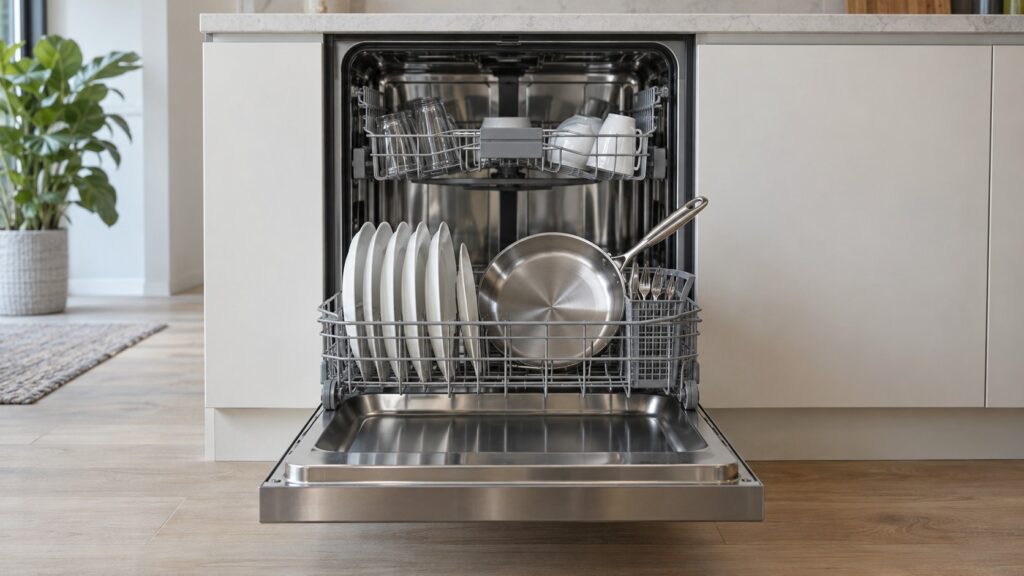
How does loading change the result more than the cycle does?
Spray arms need room to turn. A tall pan, a cutting board or a platter standing in the wrong place can block an arm or the detergent door, and no cycle will fix that. Face the dirtiest surfaces toward the center of the machine, keep bowls tilted so they do not hold water, and do not nest spoons together. If you have a third rack, keep it for light utensils and flat items. Our OrbitClean spray arm guide explains how the arm works and what stops it.
What helps dishes come out dry?
Drying depends on the cycle you choose, the rinse aid and the load, according to our features glossary, not on the name of the drying feature. Make sure the rinse aid dispenser is not empty, load plastics on the top rack where they dry less well and leave the door shut at the end of the cycle unless the manual says otherwise. Our dishwasher not drying guide goes through the checks in order. Choosing a heavier cycle will not fix a dispenser that is empty.
What do extra options such as heated dry or a boost do?
Many models add buttons that change a cycle instead of replacing it: a sanitize or high-heat option, a stronger wash, a delay start or a different drying choice. What each option does on your exact model, how it changes the run and whether it can be combined with a given cycle is spelled out in your owner’s manual, and we do not guess at it here. As a general rule, use an option for a reason you can name, such as a load of heavily soiled cookware. Stacking every option on every load rarely cleans better, and it makes it harder to tell which change helped. If you are comparing models before a purchase, our features glossary shows which feature names belong to which model.
When is the problem not the cycle?
If dishes stay dirty or gritty on every cycle, the cause is usually a clogged filter, a blocked spray arm, a drain problem or an inlet that is not filling properly. Our not cleaning guide covers those. If the control shows an i-code, read our dishwasher error codes guide for what it means. Do not open the door panel or the base to look for the cause. Wiring, the pump and the inlet valve are a technician’s work, and if water reaches an outlet or you smell burning, switch off the breaker at the panel while standing on a dry floor.